


Introduction
In economic theory, the law of supply states that when the price of a good increases, the quantity offered by producers or sellers tends to rise, assuming other factors remain constant (Mankiw, 2021). However, field conditions show that traders' decisions do not always follow this pattern directly.
This phenomenon is evident in the trading activities at the Bukit Pamulang Traditional Market 2, South Tangerang. Based on interviews with ten traders selling five commodities—red chili, carrots, broiler chicken, rice, and coconut/coconut milk—it was found that inventory decisions are influenced by various factors.
These factors include product shelf life, weather changes in production centers, availability of storage facilities, price fluctuations from suppliers, and the traders' relationships with regular customers (Group 1, 2026).
These findings demonstrate that price increases are not always met with increased stock. In certain conditions, traders choose to reduce purchases to avoid losses from unsold or spoiled goods.
Red Chili: Fluctuating Prices, Limited Inventory
Red chili is one of the commodities most susceptible to price changes. Based on interviews, the price of red chili at the trader level ranges from Rp40,000 to Rp75,000 per kilogram.
Price hikes generally occur when supply is disrupted by extreme rain or prolonged drought in production regions. These conditions affect harvest yields and distribution to the market.
In addition to facing supply uncertainty, traders must consider the relatively short shelf life of chili. When stored at room temperature, chili generally lasts only one to two days before quality declines.
Consequently, when purchase prices at the central market rise, some traders choose to limit the amount of stock they purchase. This strategy is used to minimize the risk of loss if the chili does not sell out.
This supply pressure is also reflected in national production data. According to reports from the Directorate General of Horticulture (2024), Indonesia's chili production decreased from 1,544,441 tons in 2022 to 1,506,762 tons in 2023, or by approximately 2.4 percent.
Research by Purnama et al. (2021) on the red chili supply chain in Tasikmalaya Regency shows that distribution involves several intermediaries with a marketing margin of around Rp9,000 per kilogram. The study also identified efficiency issues within the supply chain.
Similar conditions potentially affect chili distribution to the Pamulang area. However, further research is needed to determine the specific supply chain structure and marketing margins applicable in that region.
Carrots: When Prices Rise, Traders Reduce Stock
An interesting finding was also observed in carrot trading. One trader revealed that when the price of carrots increased from Rp12,000 to Rp16,000 per kilogram, the amount of stock purchased was actually reduced.
At first glance, this action appears to contradict the law of supply. However, the trader's decision can be understood through considerations of changing consumer behavior.
When carrot prices rise, some consumers may switch to substitute commodities, such as potatoes or other vegetables. In microeconomic theory, the existence of substitute goods can influence consumer demand for a product (Sukirno, 2013).
Therefore, traders must account for the possibility of a decline in sales volume before deciding on the amount of stock to provide.
Meanwhile, other traders choose to maintain carrot prices in the range of Rp10,000 to Rp14,000 per kilogram. This strategy is employed to maintain relationships with regular customers and preserve competitiveness.
Regarding national production, data from the Directorate General of Horticulture (2024) shows that carrot production decreased from 737,965 tons in 2022 to 668,178 tons in 2023, or by approximately 9.5 percent.
This production decline indicates supply-side pressure that can limit traders' flexibility in determining inventory levels.
Chicken and Coconut: Shelf Life Determines Supply Strategy
Product shelf life is a crucial factor in determining supply strategies, especially for perishable food commodities.
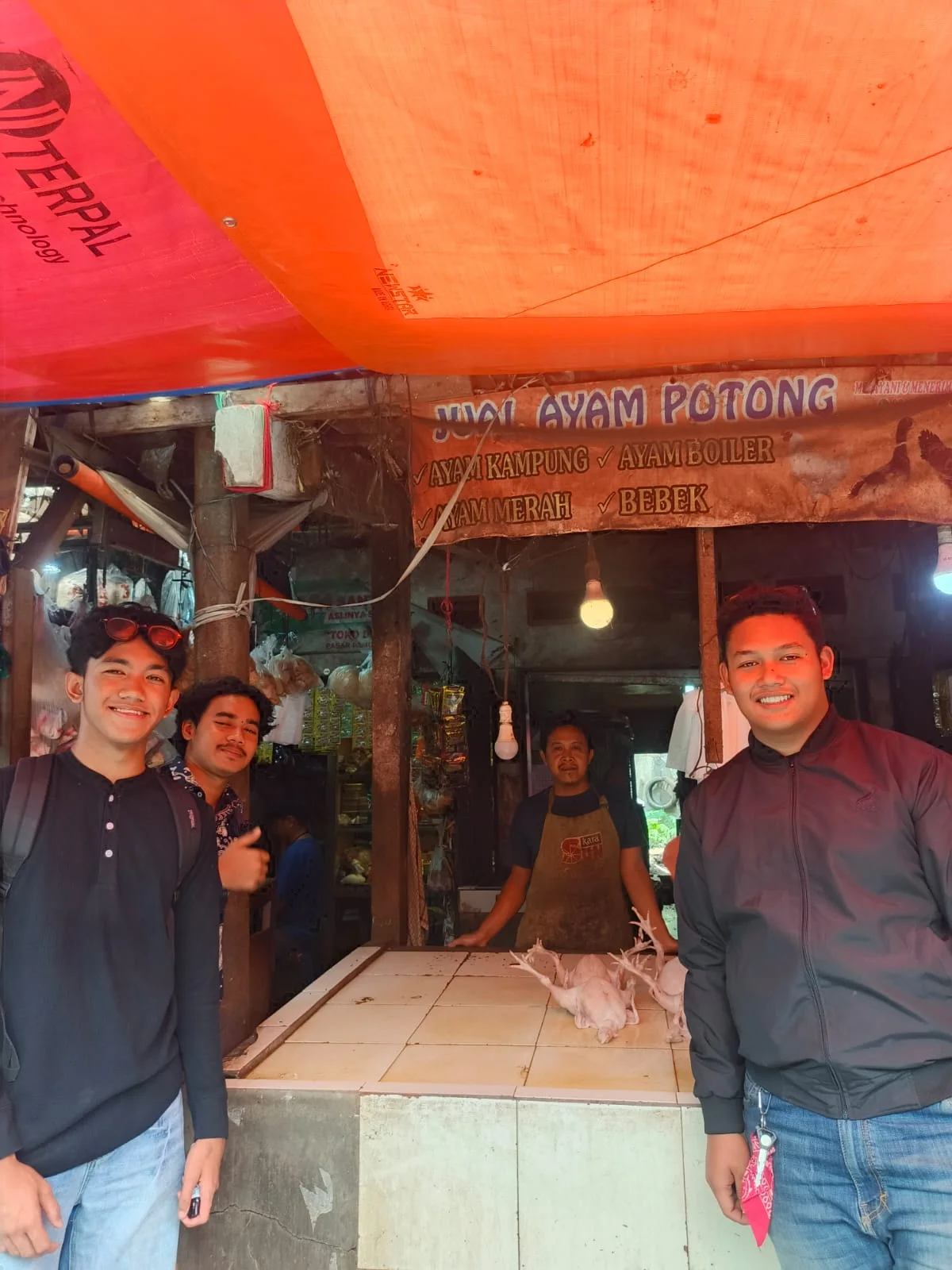
In the broiler chicken trade at Bukit Pamulang Traditional Market 2, the selling price ranges from Rp35,000 to Rp42,000 per kilogram.
Traders who have cold storage facilities or freezers have greater flexibility in managing inventory. Based on respondent statements, remaining chicken can be stored for up to two days with such facilities.
Conversely, traders without refrigeration tend to try to sell out their stock on the same day to avoid quality degradation and potential losses.
Approaching major religious holidays, traders tend to be more willing to stock up even if prices rise, due to increased consumer demand during those periods.
A different situation was found in the trade of coconuts and coconut milk. Whole coconuts have a relatively longer shelf life compared to freshly squeezed coconut milk.
Based on interviews, whole coconut traders can store inventory for three to five days, with stock levels reaching 300–400 units. Meanwhile, fresh coconut milk is generally sold within one day because it spoils more quickly.
These differences in product characteristics influence purchasing decisions from suppliers.
Coconut milk traders strive to keep supply aligned with daily sales needs. Conversely, whole coconut traders have greater storage flexibility, though they may still reduce purchase quantities when distributor prices rise (Group 1, 2026).
These findings indicate that storage capacity is a key factor determining how traders respond to price changes.
Rice: Supply Stability and the Role of Government Reference Prices
Unlike other commodities, rice trading has distinct characteristics because the government implements price policies as a market control instrument.
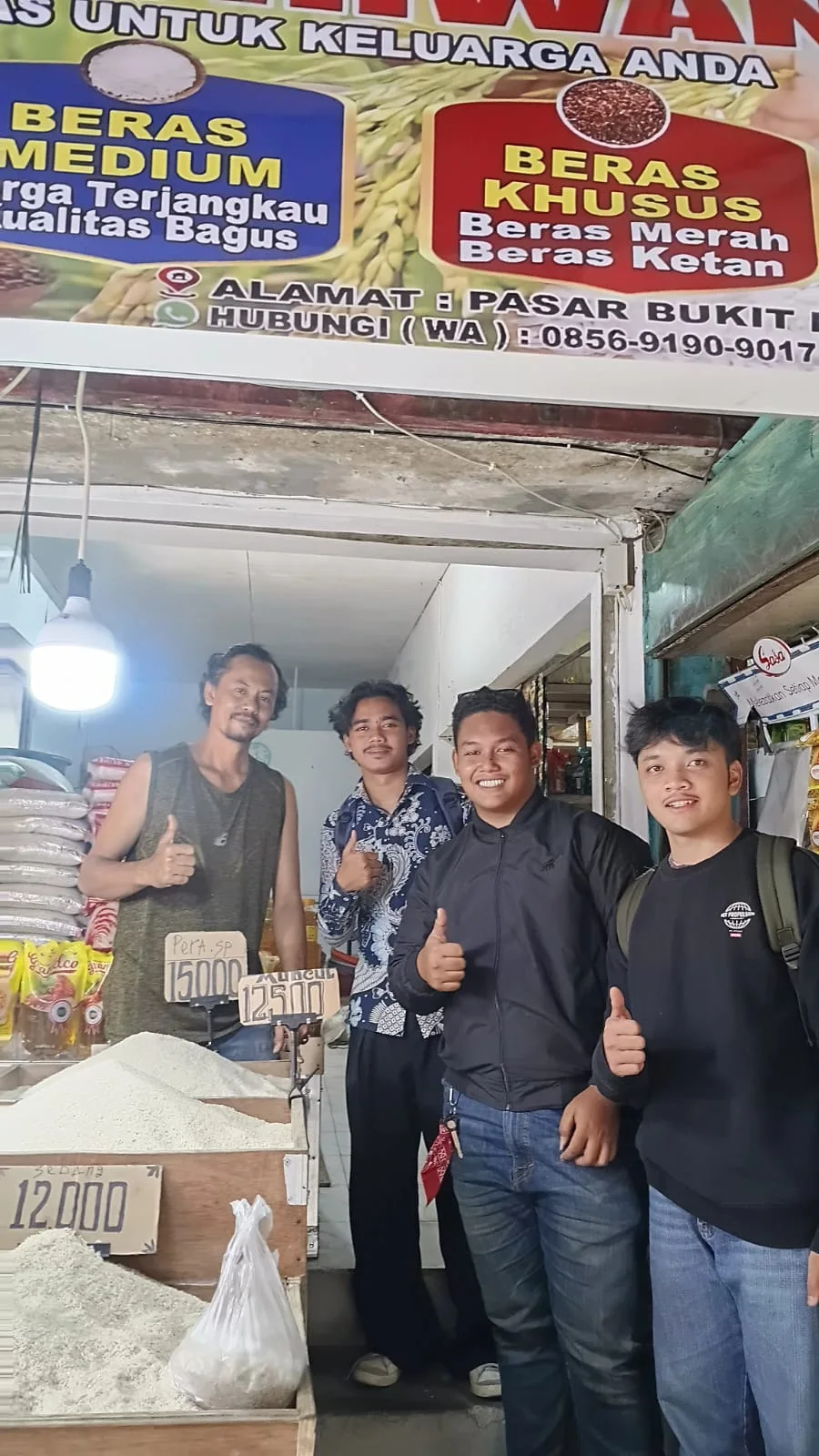
One rice trader stated that the Highest Retail Price (HET) is used as a reference for determining selling prices to consumers.
The HET policy aims to set price ceilings for rice in specific categories and regions. These provisions are also adjusted according to evolving market conditions.
In 2024, the government set the HET for premium rice in Zone 1, including Java, at Rp14,900 per kilogram through National Food Agency Regulation Number 5 of 2024.
Subsequently, in August 2025, the HET for medium rice in Zone 1 was adjusted to Rp13,500 per kilogram (Bisnis.com, 2025).
In addition to being influenced by price policies, rice has an advantage in terms of shelf life. With dry warehouse conditions and proper storage management, rice can be stored for several months.
This characteristic provides greater flexibility for traders in managing inventory compared to sellers of perishable commodities like chili, fresh vegetables, and coconut milk.
Thus, supply decisions for rice are influenced not only by market price changes but also by government policy, storage capacity, and estimates of consumer demand.
Trader Strategies in Facing Supply Uncertainty
Interviews with traders of the five commodities show that supply decisions are not solely determined by changes in selling prices.
Small traders must consider the risk of product spoilage, limited capital, storage capacity, demand stability, and changes in purchase prices from distributors.
For commodities with short shelf lives, price increases may actually prompt traders to reduce purchases to avoid losses. Meanwhile, more durable commodities provide more room for traders to manage stock.
These conditions do not necessarily invalidate the law of supply. In economic theory, a positive relationship between price and quantity supplied holds when other factors are held constant. In trading practice, these various factors often change simultaneously.
Traders' dependence on supplies from outside the South Tangerang region is also a challenge. Weather disruptions in production centers, transportation obstacles, and price hikes at central markets can directly affect purchase costs and the amount of goods available in traditional markets.
To address these conditions, trade strengthening strategies are needed that focus not only on price but also on distribution efficiency and risk management.
One alternative to consider is collective purchasing through trader cooperatives. Through this mechanism, traders could potentially gain better bargaining power when negotiating with suppliers.
Additionally, direct partnerships with farmers or production centers could be an option to shorten distribution channels and reduce dependence on intermediaries.
Providing shared cold storage facilities in the market area could also help traders maintain product quality and reduce the risk of losses from unsold goods.
On the other hand, transparency in daily price information is necessary so that traders can make purchasing decisions based on more accurate market developments.
Conclusion
Trading phenomena at the Bukit Pamulang Traditional Market 2 show that the relationship between price and the quantity of goods offered does not always follow a simple path in daily practice.
Price increases do not automatically prompt traders to increase inventory. For a number of commodities, traders choose to limit purchases as a form of anticipation against the risks of product spoilage, declining demand, and supply uncertainty.
The differing characteristics of red chili, carrots, broiler chicken, rice, and coconut/coconut milk show that product shelf life, storage facilities, price policies, and distribution chain conditions play significant roles in traders' economic decision-making.
Therefore, improving supply chain efficiency, strengthening trader institutions, providing storage facilities, and ensuring access to price information need to be prioritized in the development of traditional markets.
Without such support, consumers will continue to face price instability, while small traders must bear most of the risks of market changes independently.
Bibliography
National Food Agency. (2024). National Food Agency Regulation Number 5 of 2024 regarding Amendments to National Food Agency Regulation Number 7 of 2023 concerning the Highest Retail Price for Rice. https://peraturan.go.id/files/peraturan-bapanas-no-5-tahun-2024.pdf
Bisnis.com. (2025, 26 August). Done! Medium rice HET officially increased, here are the details. https://ekonomi.bisnis.com/read/20250826/12/1905760/tok-het-beras-medium-resmi-naik-ini-perinciannya
Directorate General of Horticulture. (2024). Final horticultural figures for the year 2023. Ministry of Agriculture. https://hortikultura.pertanian.go.id/wp-content/uploads/2024/04/buku_atap_2023.pdf
Group 1. (2026). Interview results with traders at Bukit Pamulang Traditional Market 2, South Tangerang [Unpublished primary data].
Mankiw, N. G. (2021). Principles of economics (9th ed.). Cengage Learning.
Purnama, A., Noor, T. I., & Yusuf, M. N. (2021). Analysis of the red chili supply chain in Ciandum Village, Cipatujah District, Tasikmalaya Regency. Jurnal Ilmiah Mahasiswa AGROINFO GALUH, 8(2), 313–323. https://doi.org/10.25157/jimag.v8i2.5031
Sukirno, S. (2013). Microeconomics: Introductory theory (Third edition). RajaGrafindo Persada.



Comments 0
Write a Comment Share your response