

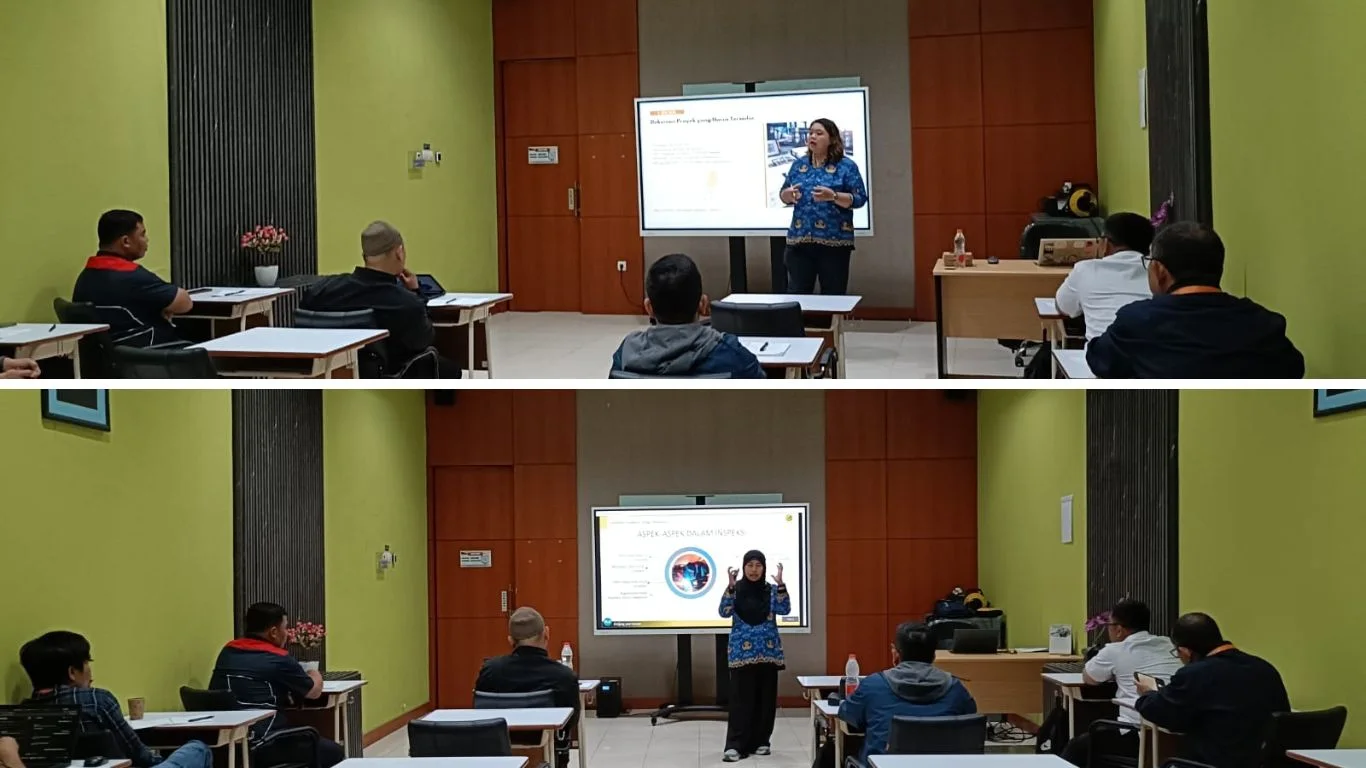
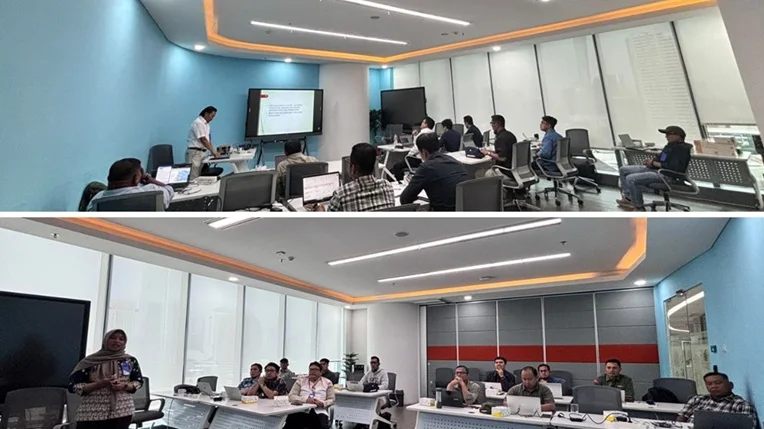
CEPU, JurnalPost.com — The Human Resources Development Center for Oil and Gas (PPSDM Migas) has conducted training and certification for Storage Tank Inspectors for personnel from PT Transportasi Gas Indonesia (TGI). The program, which took place from 9 to 11 November 2026, is aimed at improving the competence of technical staff in maintaining facility reliability and operational safety within the oil and gas industry.
The program, held at the PPSDM Migas facility, provided training on the inspection, maintenance, and condition assessment of storage tanks. This competency is essential to ensure that inspection activities are carried out accurately and in accordance with applicable technical standards.
Through this training, TGI personnel are expected to be better equipped to identify potential equipment damage, understand facility fitness requirements, and take appropriate measures based on inspection results.
The three-day activity included theoretical learning, technical evaluations, and a competency test as part of the oil and gas workforce certification process.
Storage Tank Inspection as a Vital Component of Oil and Gas Safety
PPSDM Migas instructor Fanny Leestiana explained that mastering storage tank inspection competencies is a critical requirement for technical personnel in the energy sector.
According to her, storage tanks are industrial facilities that require strict supervision because potential damage to their structures or supporting components can pose significant safety risks.
"Mastering storage tank inspection competencies is vital for TGI workers. Storage tanks are strategic assets with high operational risks. By understanding fitness standards, periodic testing, and early identification of potential damage, workers can ensure that storage facilities remain secure, prevent structural failure, and guarantee the continuity of energy supply safely," said Fanny Leestiana on the sidelines of the training.
Storage tank inspection is not only related to the physical condition of the facility. Inspectors must also understand technical documents, usage history, and inspection requirements that serve as the basis for assessing equipment fitness.
Damage that is not identified early has the potential to develop into more serious issues. Therefore, periodic inspection is a crucial step in operational risk management.
In practice, inspections may include assessing construction conditions, examining parts prone to corrosion, and evaluating any modifications or repairs previously performed on the facility.
The results of the inspection then serve as the basis for preparing reports and technical recommendations to determine the necessary follow-up actions.
Adhering to National Competency Standards
The Storage Tank Inspector competency is one of the certification fields provided by PPSDM Migas through its professional certification body.
Based on the provisions of the Indonesian National Work Competency Standards (SKKNI), the scope of this competency includes identifying tank classifications, verifying documents and construction, inspecting tank conditions during both operational and non-operational states, and preparing inspection reports.
This capability is necessary so that inspection personnel can carry out their duties based on measurable procedures and technical parameters.
Through the training provided, participants are expected to not only understand inspection requirements but also be able to apply them when dealing with various equipment conditions in an industrial environment.
Understanding repairs, construction changes, and tank condition assessment are part of the knowledge required by an inspector.
In addition to supporting safety aspects, the ability to perform inspections accurately can also help companies plan maintenance activities more effectively.
By knowing the condition of facilities through structured inspections, potential operational disruptions can be identified earlier, allowing repair actions to be planned according to needs.
Certification to Measure Personnel Competence
In addition to attending training, participants undergo evaluation and competency testing stages. This process aims to assess the alignment of participants' knowledge and skills with the standards applicable in the field of storage tank inspection.
Participants declared competent are entitled to receive a certificate of competency in accordance with the provisions of the certification scheme they followed.
The certificate serves as proof of recognition of a person's professional ability to carry out work in accordance with their field of competence.
However, certification does not automatically guarantee that all facilities are free from risk. Equipment reliability still requires continuous supervision, periodic inspection, maintenance, and the consistent application of safety procedures.
For companies, technical personnel with measurable competencies can support more systematic inspections while strengthening occupational safety management.
Supporting Energy Infrastructure Reliability
PT Transportasi Gas Indonesia is a company engaged in natural gas transportation via pipeline networks. The company operates a gas transmission network that serves both domestic and international market needs.
In energy transportation activities, infrastructure reliability is a key factor in maintaining service continuity.
Therefore, workforce competency development needs to be carried out continuously, including in the fields of equipment inspection and industrial facility safety management.
The training organized by PPSDM Migas for TGI personnel is a form of human resource capacity building in the oil and gas sector.
Through this activity, participants are expected to have a better understanding of an inspector's responsibilities, ranging from assessing equipment conditions to compiling recommendations based on inspection results.
Ultimately, this increase in competence is expected to support more reliable industrial asset management, minimize the risk of disruptions, and strengthen the implementation of safety standards in energy operational activities.



Comments 0
Write a Comment Share your response