

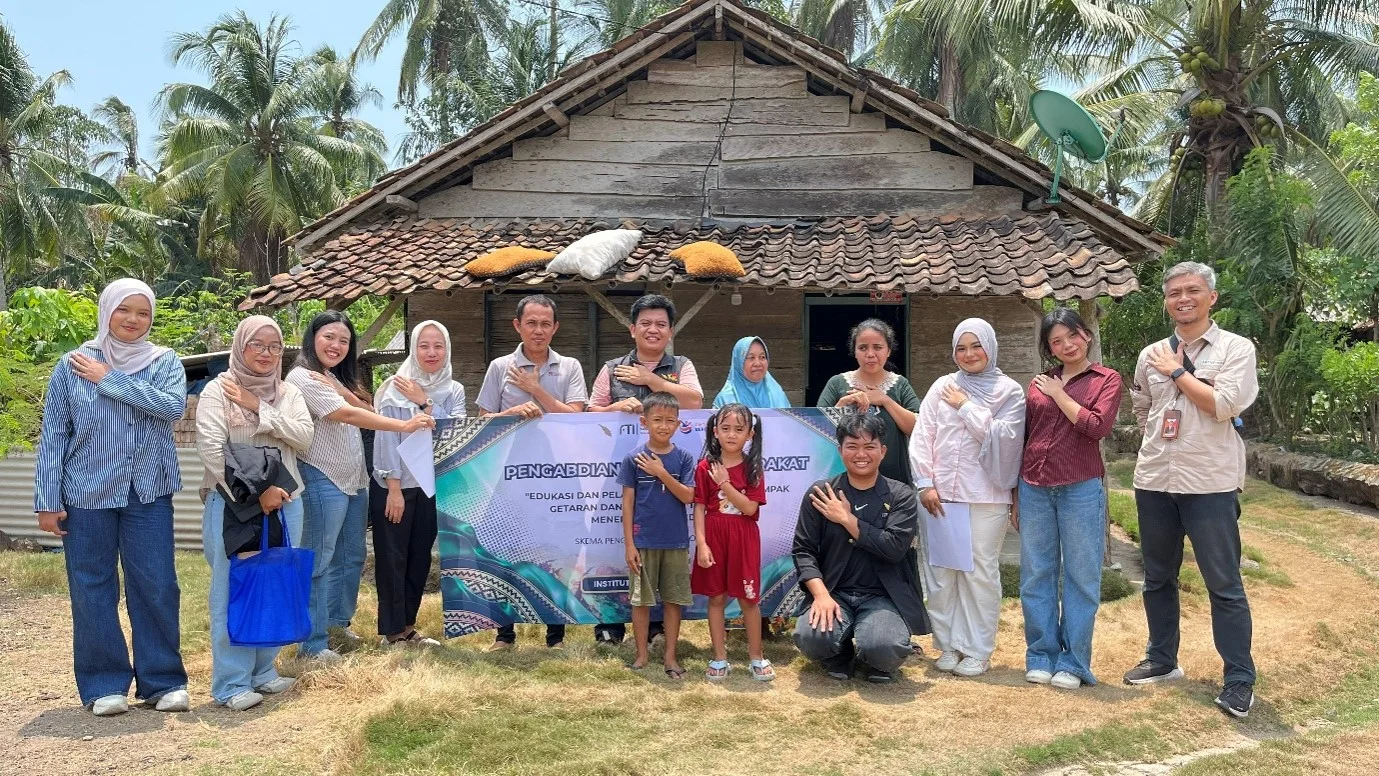
South Lampung, JurnalPost.com – The Sumatra Institute of Technology (ITERA), through its Community Service (PkM) program, is providing education and guidance to residents of Dusun Sudul, Sukamarga Village, South Lampung Regency, who live near a limestone mining area that utilizes blasting methods.
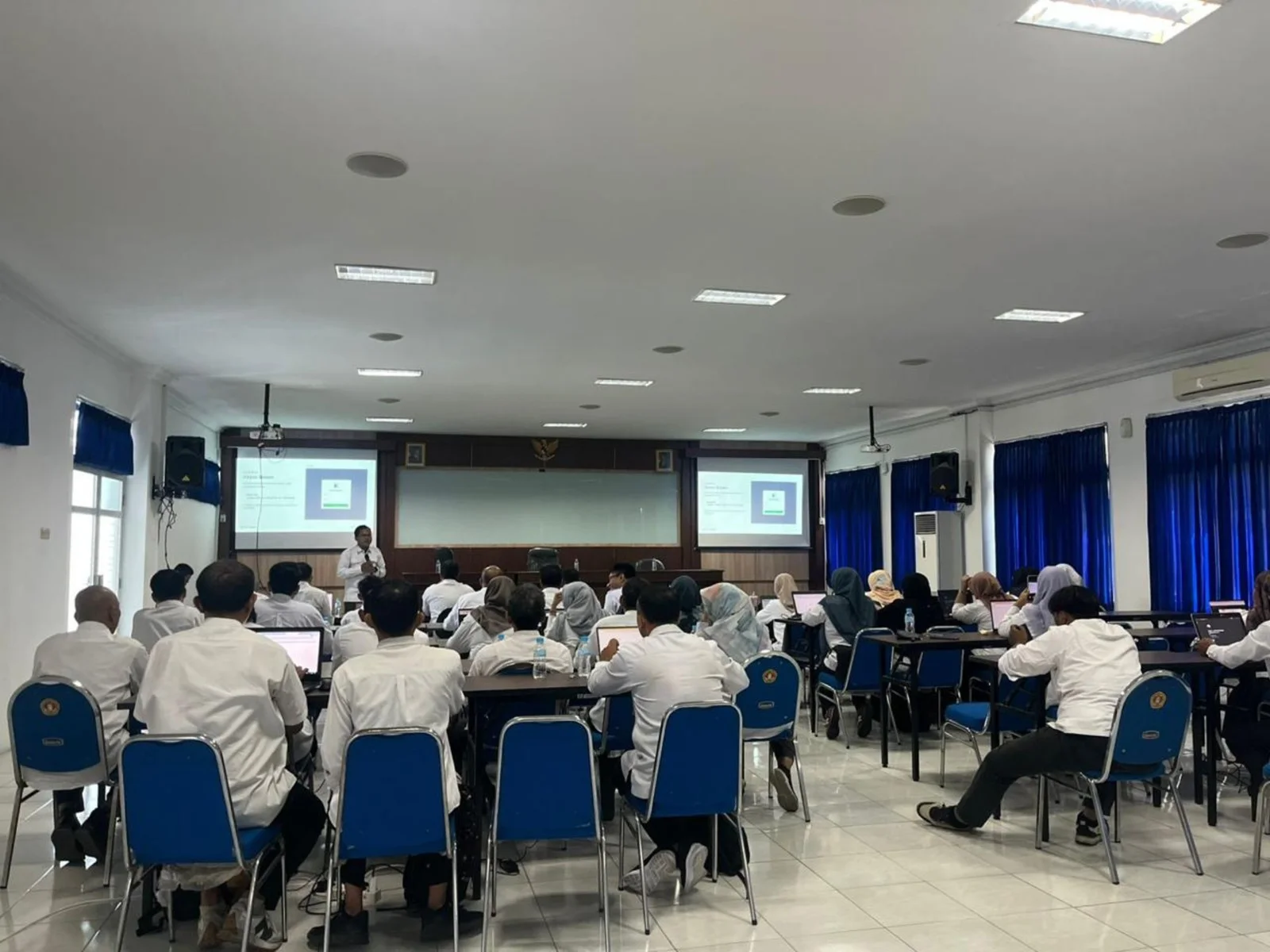
The activity, titled “Education and Training for Communities Affected by Mining Vibrations and Noise from Blasting Operations” began with field observations, direct interviews, and the distribution of questionnaires to the community on Sunday (8/11/2026).
This program aims to improve public understanding of mining blasting activities, their potential environmental impacts on residential areas, and the steps residents can take to independently identify and monitor the effects of mining operations.
Residents Complain of Blasting Vibrations and Noise
Dusun Sudul is a residential area located approximately 1,480 meters from a limestone mining site that employs blasting methods.
The local community has diverse livelihoods, ranging from brown sugar production and coconut fiber sales to livestock farming, agriculture, and fishing.
The presence of mining activities near the settlement has become a concern for the community, as the impacts are not limited to noise and vibration but also potentially affect the residents' economic activities and daily lives.
Based on interviews conducted by the ITERA PkM team, several residents reported feeling the impact of blast sounds and vibrations from the mining activities. They also expressed concern over the condition of their homes and public facilities, including a local prayer room (musholla), which have reportedly developed cracks.
Additionally, some livestock activities have been reportedly disrupted because the feeding locations are situated at the foot of the hill, relatively close to the blasting area.
Residents who work as fishermen also revealed that their fishing activities are restricted when blasting operations take place. This condition is a point of concern as it relates to the sustainability of the community's livelihood.
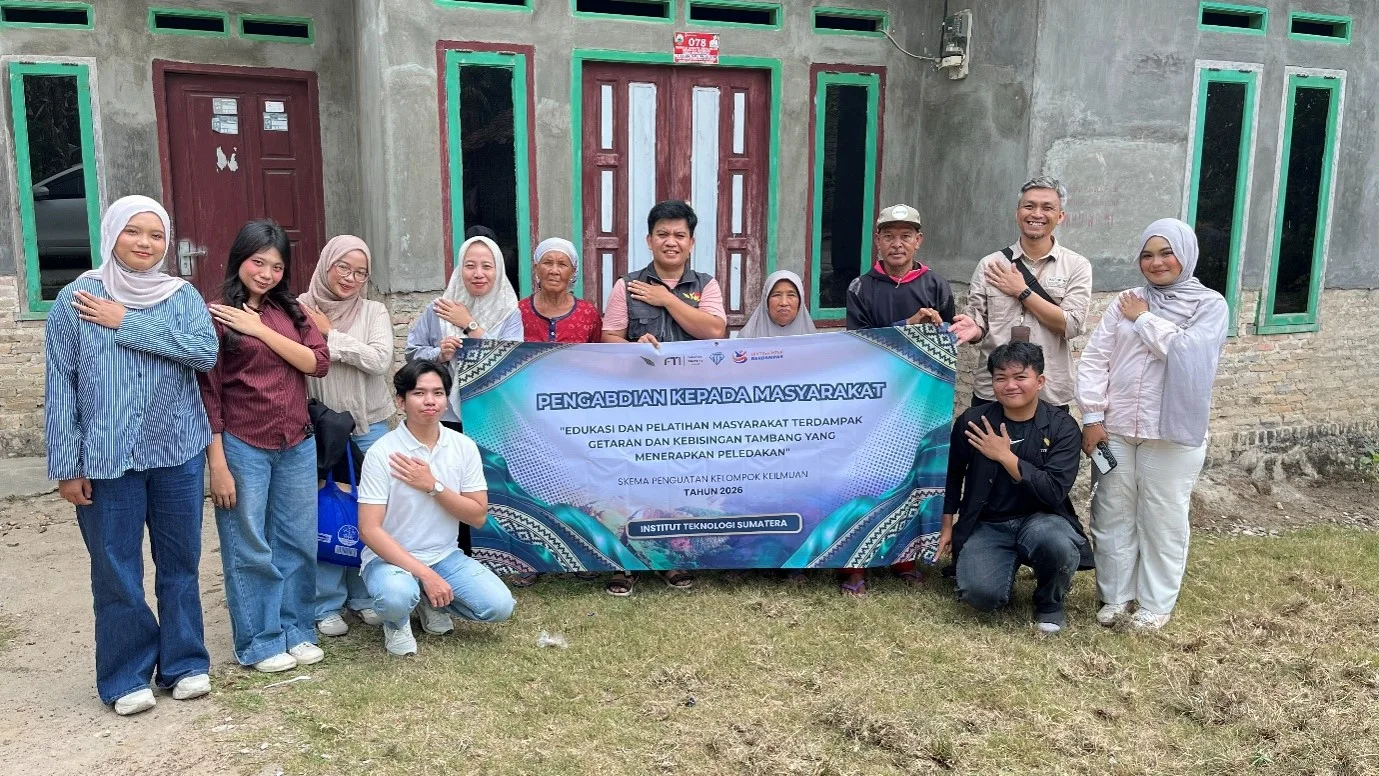
The Head of Hamlet IV, Zaini Irwan Dani, confirmed that the sound and vibrations from blasting activities can be felt by residents in the vicinity.
“The sound of the explosions is audible and the vibrations are felt to the point that several houses and the musholla have developed cracks,” said Zaini.
However, the correlation between the blasting activities and the reported structural damage still requires further technical examination to confirm the cause and the extent of the impact.
ITERA Provides Education and Learning Modules
In an initial survey involving 10 residents of Dusun Sudul, the ITERA PkM team identified a need to improve public understanding of the rock blasting process and the potential impacts of the resulting vibrations and noise.
As part of the support, the team compiled and distributed learning modules to the community. These modules were designed as educational materials to help residents better understand the mining activities occurring near their homes.
The material provided includes an introduction to rock blasting techniques, the impacts of vibration and noise, regulations related to blasting activities, and methods for predicting and controlling these impacts.
The module also discusses several technical parameters, including safety distance references of 300 meters for equipment and facilities, and 500 meters for humans. Furthermore, it covers noise parameters of 120 dB(L), referencing SNI 7570:2023 and SNI 7571:2023.
Through these materials, the community is expected to gain basic knowledge to understand the risks of blasting activities while increasing awareness of the importance of safe environmental management.
Involving Mining Engineering Lecturers and Students
This community service activity was carried out through a collaboration between ITERA and the Sukamarga Village Government, specifically with the community of Dusun Sudul.
The village government and residents supported the implementation of the activity through coordination, the provision of field information, and active participation in interviews, surveys, and discussions with the team.
The ITERA PkM team is led by Alio Jasipto, with members Hafid Zul Hakim, Deni Mildan, and Alicya Inmas Mauladika. All are lecturers from the Mining Engineering Study Program at the ITERA Faculty of Industrial Technology.
The program also involved seven Mining Engineering students: Yulia Mardiani Putri, Syakila Rahmadhina, Faqih Anada Putra, Niken Fransiska Putri, Raja Albi, Tio Berta br Sirait, and Ocha Naisa Ramadhany.
The involvement of lecturers and students is part of applying science and technology within the community, particularly in providing understanding regarding mining activities and environmental impact management.
Beyond providing education, this activity serves as a means for the ITERA academic community to directly understand the issues faced by residents living near mining areas.
Encouraging Dialogue between Residents, Companies, and Universities
As a follow-up, the Head of Dusun Sudul plans to hold a meeting with affected residents, inviting representatives from the mining company and ITERA.
The meeting is intended to serve as a communication forum to discuss various resident complaints and seek mutual understanding regarding the issues the community has been experiencing.
The presence of the university is expected to help provide explanations based on a scientific approach, particularly regarding the technical aspects of blasting, vibration, noise, and their potential environmental impacts.
Residents requiring further information regarding the educational activities or the impacts of blasting may coordinate with Alio Jasipto, the head of the ITERA PkM team.
Through this service program, ITERA hopes to build sustainable cooperation between the university, the village government, the community, and the company.
Education based on field observations is expected to help the residents of Dusun Sudul become more knowledgeable, environmentally conscious, and independent in identifying and monitoring the impacts of mining activities near their homes.


Comments 0
Write a Comment Share your response