

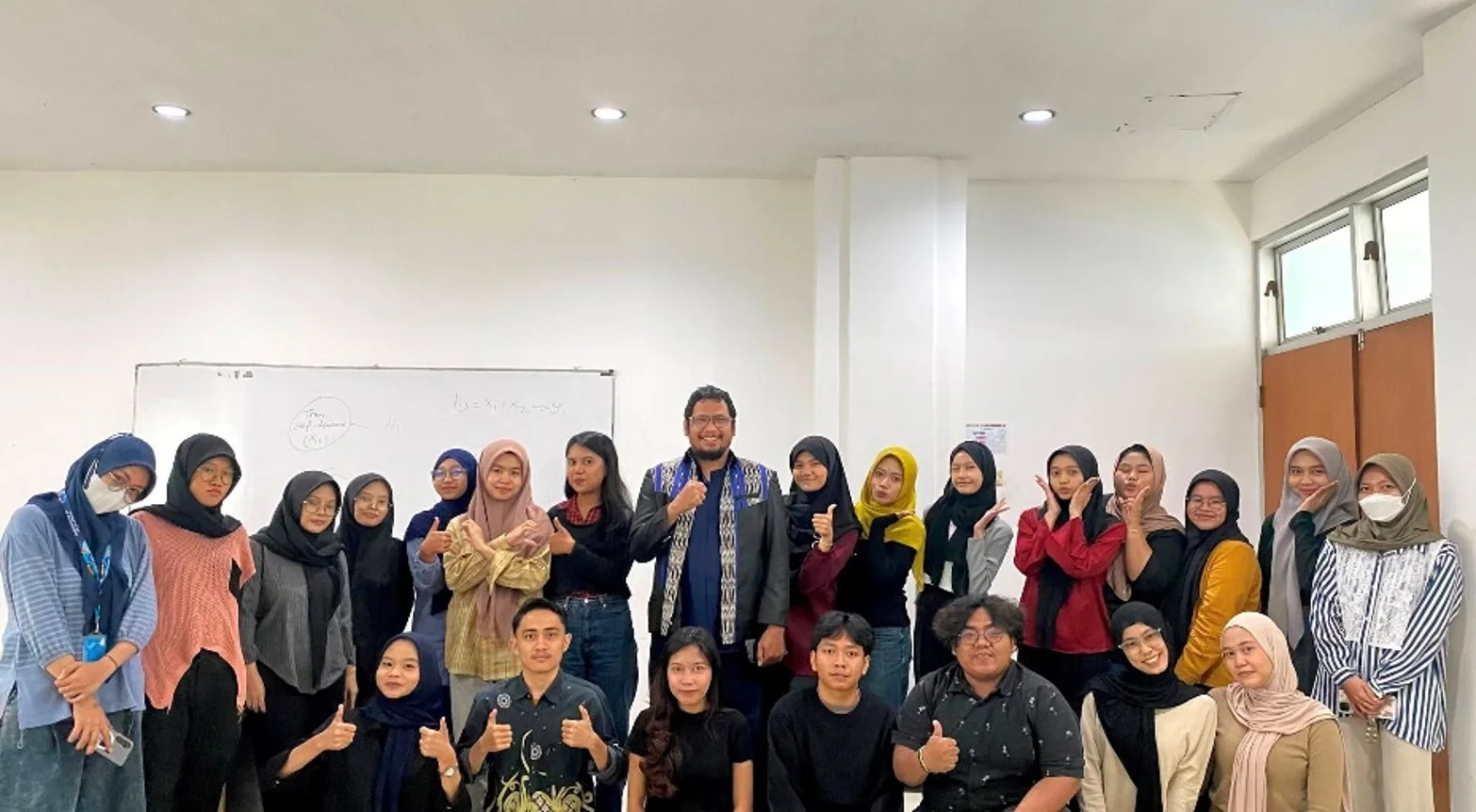
JAKARTA, JurnalPost.com – Scholarly journal publication is a vital medium for academics to disseminate research findings while contributing to the advancement of knowledge. Amidst the evolving landscape of education and the growing need for relevant research, academic inquiry and publication play a strategic role in bridging theory with real-world societal issues.
This is a core focus for Lukman Hakim Sangapan, an academic active in research, writing, and scientific development, particularly within the fields of management and economics.
Through his involvement in publishing scholarly articles, Lukman strives to make research an integral part of the learning process and continuous academic capacity building.
For him, scholarly publication is not merely about fulfilling academic obligations. More importantly, scientific work serves as a means to broaden perspectives, introduce new ideas, and foster discussions that enrich the understanding of various issues in economics and management.
Scholarly Publication and the Advancement of Knowledge
In higher education, research holds a significant position as a pillar of the 'tridarma' (three duties) of higher education. Research findings published in scholarly journals serve as essential references for students, lecturers, researchers, and practitioners who require an academic foundation to understand specific issues.
In the fields of management and economics, the demand for research continues to grow alongside changes in the business environment, digital transformation, and the increasing complexity of organizational management.
Various issues, such as leadership effectiveness, human resource management, business strategy, work productivity, and organizational decision-making, require studies supported by rigorous research methodologies.
Through scholarly publication, various findings and research approaches can be read, reviewed, and further developed by the academic community.
Lukman Hakim Sangapan views these activities as part of the process of building an intellectual tradition that extends beyond the mere compilation of research reports.
A study has a greater opportunity to provide broader benefits if its results are accessible, understandable, and used as a reference by those who need them.
Therefore, scholarly publication should be directed not only at increasing the volume of academic work but also at generating knowledge that is relevant to societal development.
Building a Sustainable Research Culture
Strengthening a research culture is inseparable from an academic's consistency in developing critical thinking skills, processing information, and constructing arguments based on scientific approaches.
This process requires diligence, starting from defining research problems, constructing theoretical frameworks, selecting methodologies, collecting and analyzing data, to presenting findings in the form of scholarly articles.

Furthermore, the quality of a publication is determined by the accuracy of references, the clarity of the research contribution, and adherence to academic ethics.
In this context, the research and scientific writing activities conducted by Lukman are part of his efforts to develop his capacity as an academic, lecturer, researcher, and author.
These academic activities demonstrate the importance of the link between learning, research, and the dissemination of knowledge.
On the other hand, increasing demands for higher education quality require academics to continuously update their knowledge and keep pace with developments in their respective disciplines.
Scholarly journal publication can serve as a space to test ideas, obtain feedback from the academic community, and develop follow-up research.
Research Collaboration to Address Economic and Management Challenges
Developments in the economy and the business world present increasingly diverse problems. Technological changes, work patterns, consumer behavior, and the organizational need for adaptive human resources are among the issues opening up new research opportunities.
To address these challenges, collaboration between universities, academics, researchers, and practitioners is becoming increasingly vital.
Research cooperation allows issues to be examined through various approaches while bridging academic perspectives with practical experience in the field.
In management, for example, research on productivity and human resource management can provide insights into the factors that influence organizational performance.
Meanwhile, economic research can help explain changes in business activity, market behavior, and the challenges of decision-making in a dynamic business environment.
However, these benefits remain dependent on the quality of the research, the accuracy of the analysis, and the researcher's ability to communicate their findings clearly.
Therefore, strengthening scholarly publication must go hand-in-hand with improving research competence and developing academic networks.
Making Publication Part of an Academic's Contribution
Scholarly publication is essentially a long process that requires seriousness and academic responsibility.
Published articles not only reflect a researcher's ability to compose written work but also serve as documentation of the evolution of knowledge that can be utilized for subsequent research.
Through his involvement in research and publication, Lukman Hakim Sangapan continues to prioritize scientific development as a core part of his academic activities.
Consistency in writing and developing research is expected to contribute to the strengthening of scientific literature, particularly in the fields of economics and management.
Ultimately, the success of academic activities is not measured solely by the number of papers published, but also by the quality of ideas, the rigor of the scientific process, and the benefits of the knowledge produced.
With a continuously evolving research culture, scholarly journal publication is expected to become a space for knowledge exchange while supporting the advancement of higher education in Indonesia.







Comments 0
Write a Comment Share your response