


Garlic prices at Jembatan Merah Market remain below the reference price. However, Indonesia's high dependency on imports keeps the commodity's price stability vulnerable to supply disruptions.
South Jakarta, JurnalPost.com — Almost every Indonesian household uses garlic as a primary seasoning. From simple stir-fries to everyday dishes, this commodity plays an irreplaceable role.
This habit ensures that demand for garlic tends to persist regardless of price increases or decreases. Consumers may adjust the quantity purchased, but the need for garlic does not simply disappear.
This condition is evident from trading activities at Jembatan Merah Market, South Jakarta. Based on interviews with vendors, garlic is mostly purchased in small quantities, but on a regular basis.
These field findings were combined with literature reviews and an analysis of market price developments throughout 2026 to observe how consumer behavior, price changes, and supply availability influence garlic demand.
Garlic Prices Remain Below Reference
Based on interview results, vendors at Jembatan Merah Market sell two types of garlic: regular garlic and 'kating' garlic.
Regular garlic is offered at approximately Rp33,500 per kilogram, while kating garlic is sold for around Rp43,000 per kilogram.
The price difference is related to the characteristics of each type. Kating garlic generally has larger cloves and a stronger aroma and flavor.
Nevertheless, most buyers tend to choose regular garlic because it is more economical for daily cooking needs.
Vendors also noted that the selling price remains relatively fixed, without special discounts for consumers buying in bulk.
The price of regular garlic at this market is lower than the price range seen in several traditional markets throughout 2026, which hovered between Rp35,000 and Rp45,000 per kilogram.
The price of Rp33,500 per kilogram is also below the reference figure of Rp38,000 per kilogram used in the group's analysis.
Price comparisons across several locations show variations between markets.
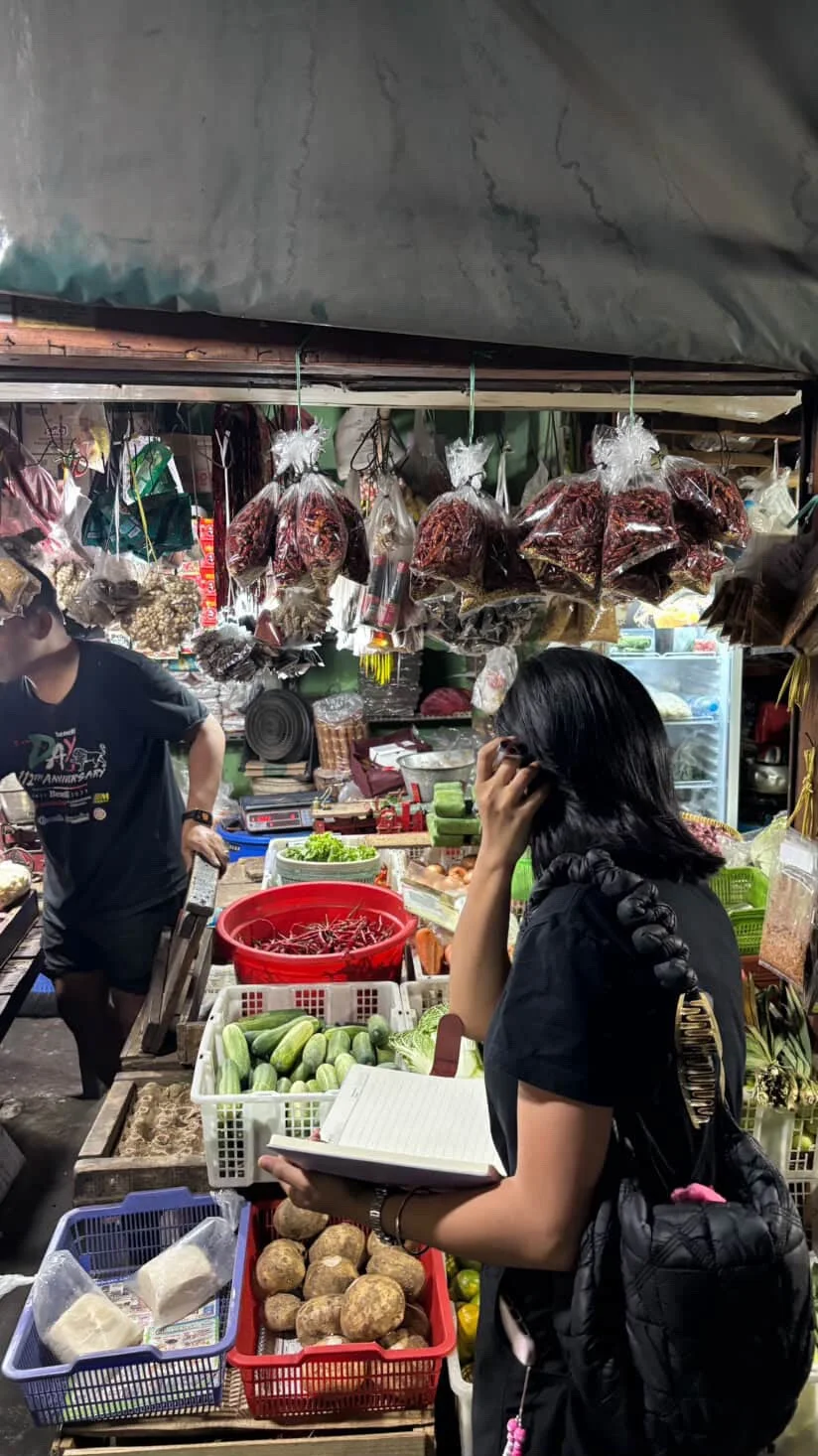
In February 2026, the price of garlic at Kebayoran Lama Market was recorded at around Rp40,000 per kilogram. Meanwhile, Honan-type garlic at Pesanggrahan Market in March 2026 was in the range of Rp35,000 per kilogram.
Entering August 2026, prices at Bintaro Modern Market were reported to reach approximately Rp45,000 per kilogram.
These differences indicate that garlic prices at the consumer level can be influenced by product type, market location, distribution conditions, and stock availability.
Small Purchases, Fast Turnover
Garlic trading activity at Jembatan Merah Market is dominated by household consumers, especially housewives and individuals purchasing food ingredients for personal use.
Purchase volumes are generally not very large, ranging from a few ounces to about one kilogram.
In a transaction example obtained through interviews, one buyer purchased 200 grams of garlic for daily cooking needs.
Other buyers purchased around 500 grams as a supply for several days, while one-kilogram purchases are usually made for larger household needs or preparation for specific events.
Vendors admitted they rarely serve consumers buying garlic in large quantities for resale.
Interestingly, although the purchase volume per consumer is relatively small, the turnover of goods is quite fast.
Vendors usually provide a stock of about 10 kilograms for a three-day period. This supply is generally exhausted by the second or third day.
This pattern shows that garlic is a routine necessity with recurring purchases.
For vendors, this condition provides relatively stable sales opportunities. However, business continuity remains dependent on the ability to maintain stock availability and prices that align with consumer purchasing power.
Why is Garlic Demand Difficult to Reduce?
In economics, the demand for a good is influenced by several factors, such as the price of the good itself, consumer income, tastes, the price of substitutes, and societal needs.
Garlic has the characteristics of a food commodity used routinely, so its demand is assumed to be relatively inelastic.
Inelastic demand means that price changes are not always followed by changes in the quantity demanded in the same percentage.
One reason is the difficulty of replacing the function of garlic in various dishes.
Its distinctive aroma and flavor make consumers continue to need the commodity even when prices rise.
Based on examples obtained in interviews, consumers with an income of around Rp3.9 million per month allocate approximately Rp20,000 to buy garlic.
This expenditure is a relatively small part of total income, so the need for garlic can still be met.
However, this does not mean consumers completely ignore price changes.
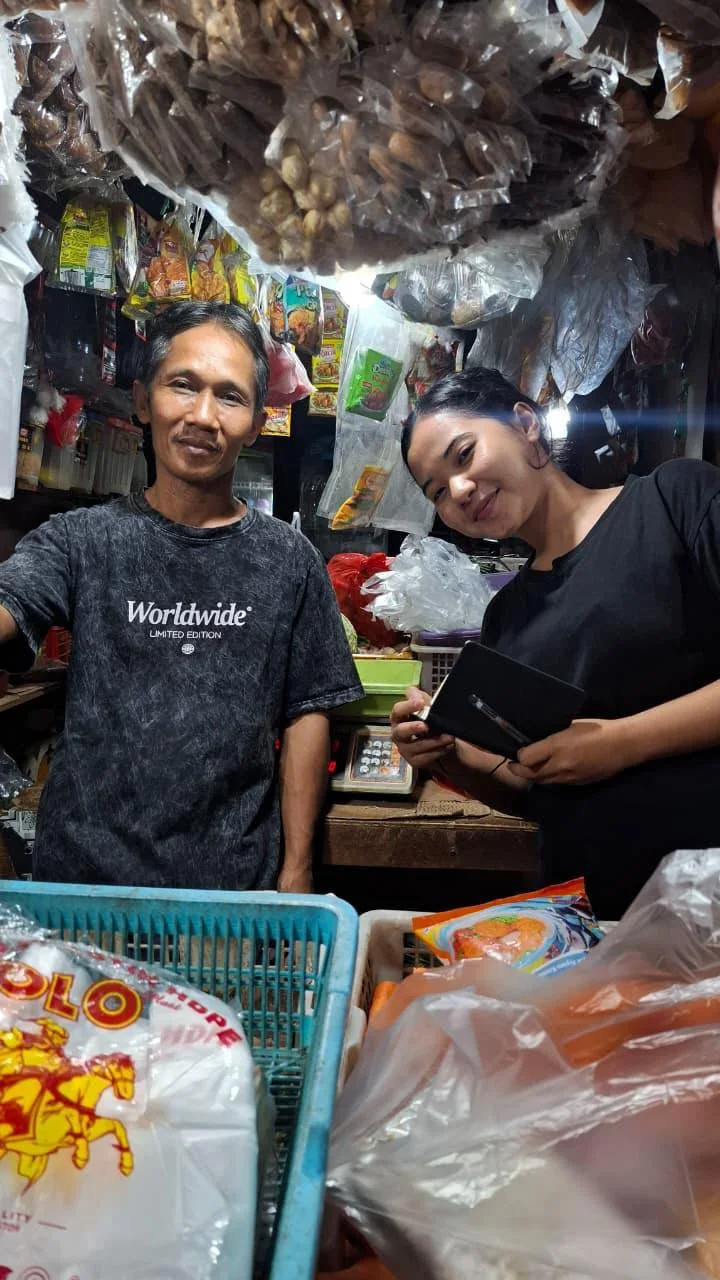
When prices increase, consumers may reduce the amount purchased, choose a cheaper type of garlic, or look for alternative food ingredients.
Vendors mentioned several products that can be used as substitutes, such as garlic powder, frozen garlic, and onions.
Nevertheless, these ingredients do not fully provide the same flavor profile as fresh garlic.
A study on shallot demand by Wibowo and Surbakti (2023) also shows that domestic prices are one of the factors influencing the demand for kitchen spice commodities.
Although that research discussed shallots, the results can serve as a comparison to understand how consumers respond to changes in food prices.
In practice, garlic is also often purchased alongside shallots, chili, tomatoes, and other vegetables.
Thus, cooking frequency and household consumption patterns play a role in determining the quantity purchased.
Ramadan and Seasonal Demand Pressure
Garlic demand is not always at the same level throughout the year.
During certain periods, especially approaching Ramadan and Eid al-Fitr, household cooking and food business activities tend to increase.
This condition can drive the need for garlic to be higher than on normal days.
As an illustration, price development reports leading up to Lebaran 2025 showed an increase in garlic prices of up to 20 percent above the reference price used in that report.
Increased seasonal demand can be offset if supply is available in sufficient quantities.
Conversely, if demand growth occurs simultaneously with distribution delays or reduced stock, pressure on prices can increase further.
To illustrate the relationship between purchase quantity and transaction value, the author group created a simulation based on prices found at Jembatan Merah Market.
With a regular garlic price of Rp33,500 per kilogram, a two-kilogram purchase costs Rp67,000.
Meanwhile, a two-kilogram purchase of kating garlic at Rp43,000 per kilogram costs Rp86,000.
If the purchase quantity increases to 10 kilograms assuming a fixed price, the transaction value for regular garlic reaches Rp335,000, while kating garlic reaches Rp430,000.
This simulation shows the change in shopping value due to an increase in purchase quantity, not a prediction of price increases.
In actual market conditions, a large increase in demand can affect prices if not balanced by additional supply.
Import Dependency as a Challenge
Behind the relatively stable demand, the main issue in Indonesia's garlic trade lies on the supply side.
Indonesia is still highly dependent on imported garlic to meet public consumption needs.
Government data and statements in 2026 show that more than 90 percent of national garlic needs are still met through imports, primarily from China.
Domestic garlic production in the reference analysis is estimated at only about 39,000 to 40,000 tons per year, while national needs reach about 600,000 tons.
The gap between production and demand highlights Indonesia's significant reliance on foreign supply.
Several regions actually have potential as garlic production centers, including Central Java, East Java, West Java, West Nusa Tenggara, and Sumatra.
However, the contribution of domestic production is still insufficient to meet national needs.
At Jembatan Merah Market, vendors stated that the goods they sell are largely obtained through suppliers from Central Java and West Java regions.
However, the origin of the supplier does not always indicate the location of garlic production because goods may pass through several distribution channels before reaching retail vendors.
Vendors also admitted they do not know in detail about trade and garlic import policies.
Information regarding price changes is usually obtained faster from suppliers or distributors than through government announcements.
Nevertheless, they understand that import policies and distribution efficiency can affect the availability of goods in the market.
Every stage of distribution, from importers, wholesalers, and suppliers to retail vendors, involves costs for transportation, storage, loading and unloading, and business margins.
The accumulation of these costs can ultimately affect the price paid by consumers.
Vendor Competition Helps Maintain Prices
In addition to supply and demand, competition among vendors is also a factor influencing garlic price formation.
Based on field observations, there are about 15 garlic vendors in the Jembatan Merah Market area.
The sufficient number of vendors gives consumers options to compare prices and product quality.
In such a situation, vendors need to maintain competitiveness to avoid losing customers.
Prices that are too high can drive buyers to switch to other vendors offering similar products.
Conversely, competitive prices with maintained quality have the potential to make customers return for purchases.
This condition shows that market competition mechanisms can help curb price increases at the retail level.
However, the ability of vendors to maintain prices still has limits, especially if prices from suppliers increase simultaneously.
Maintaining Supply to Protect Consumers
Interview results and analysis show that garlic is a food necessity with a routine purchase pattern.
Consumers tend to buy in small quantities but make recurring purchases because garlic is an important part of daily cooking activities.
These characteristics indicate that garlic demand is relatively difficult to experience a sharp decline just because of price changes.
Nevertheless, to ensure the magnitude of demand elasticity statistically, data on price changes and purchase quantities over several observation periods are needed.
From a trade perspective, garlic price stability is highly dependent on distribution efficiency, stock availability, and the ability of supply to meet consumer needs.
High dependence on imports is a challenge that needs attention because changes in international trade conditions can impact the domestic market.
Government efforts to increase production and strengthen domestic garlic seed development are important steps in reducing this dependency.
For consumers, garlic might only be bought a few ounces at a time. However, if viewed nationally, small purchases made every day create a large total demand.
Ultimately, the garlic issue is not just about the price listed on a vendor's stall.
More broadly, this issue relates to how food supplies can be maintained so that the public can continue to obtain kitchen necessities at affordable prices.
As long as garlic remains an important part of daily cooking, demand will continue to exist. The challenge is to ensure that this sought-after item remains available at a stable price.
Bibliography
Agencies and sources used in the preparation of this article include:
ANTARA. (2026, August 10). BPS: Garlic prices start to fall and are relatively controlled.
ANTARA. (2026, March). Ministry of Trade: National garlic prices gradually decline.
CNBC Indonesia. (2026, January 19). Indonesia imports 95% of garlic, dominated by China, Ministry of Trade requests evaluation.
Damayanti, A. (2025, March). Shallot and garlic prices soar ahead of Lebaran. detikFinance.
Ministry of Agriculture of the Republic of Indonesia. (2026, June 18). Breaking free from import dependency, Deputy Minister of Agriculture Sudaryono: We are preparing the foundation for garlic self-sufficiency.
Mitrapost. (2026, August 20). 90% of national needs still from imports, Coordinating Ministry for Food strengthens garlic production.
Wibowo, R. P., & Surbakti, N. J. R. (2023). Factors influencing the demand and supply of shallots in Indonesia. Agro Bali: Agricultural Journal, 6(2), 326–336. DOI: 10.37637/ab.v6i2.1312.
Primary Data Source: Interviews with garlic vendors at Jembatan Merah Market, South Jakarta (2026). Research data from Group 1, Management Study Program, Pamulang University.



Comments 0
Write a Comment Share your response