

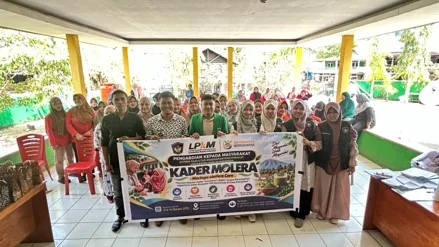
Jeneponto, JurnalPost.com — A team of faculty members from the Universitas Muslim Indonesia (UMI) Public Health Faculty held a community service program titled KADER MOLERA (Moringa oleifera Care) in Marayoka Village, Jeneponto Regency, South Sulawesi, on October 15–16, 2026.
The program focuses on improving the knowledge and skills of village health workers in preventing hypertension, particularly among women using hormonal family planning (KB) methods.
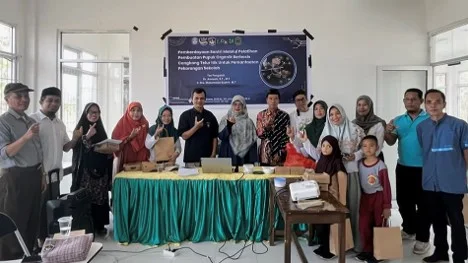
The activity involved approximately 30 participants, including health workers and members of the Marayoka Village Family Welfare Empowerment (PKK) group. Participants received education on hypertension, practical training in blood pressure monitoring, and an introduction to the potential of moringa leaves as a local food source to support a healthy diet.
This community service program was conducted by a team of UMI Public Health faculty members, namely Bd. Nurhayati, S.ST., M.Kes., and Dr. Abd. Gafur, SKM., M.Kes.
The Head of Marayoka Village, Sirajuddin, S.Pd., opened the event and expressed his appreciation for the training provided to the health workers in his region.
According to Sirajuddin, the program focusing on hypertension prevention for hormonal contraceptive users provided a new experience for the village health workers. He hopes the knowledge gained will not end with the training but will be applied in daily community health services.
Health Workers Equipped with Knowledge and Skills for Early Hypertension Detection
One of the primary concerns of the KADER MOLERA program is the importance of regular blood pressure monitoring, especially for women using hormonal contraceptives.
This monitoring is necessary because certain types of hormonal contraceptives can affect blood pressure in some users. Therefore, routine health checks are a crucial step in identifying potential blood pressure increases early on.
Through this activity, participants received explanations regarding hypertension risk factors, signs and symptoms to watch for, health impacts, and various preventive measures that can be taken in daily life.
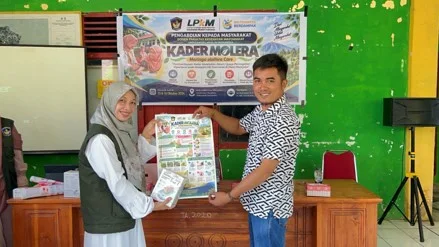
In addition to educational materials, the health workers were introduced to the use of digital tensimeters to perform basic blood pressure checks.
These skills are expected to help health workers identify blood pressure readings that require further examination by medical professionals.
As a result, health workers will not only act as information providers but will also be able to guide the community in obtaining appropriate health services.
This knowledge and skill set can later be applied through posyandu (integrated health post) activities, health counseling, and home visits to residents.
Introducing Moringa Leaves as a Local Food Source to Support Healthy Lifestyles
Beyond hypertension education, the KADER MOLERA program also introduced the use of moringa leaves (Moringa oleifera) as a local food source.
Moringa leaves are known to contain various nutrients, including vitamins, minerals, and antioxidant compounds. These contents make moringa a viable food option that can be utilized to support the community's nutritional needs.
In this activity, the use of moringa leaves was introduced as part of a promotive and preventive approach through healthy eating habits.
However, consuming moringa leaves is not a substitute for antihypertensive medication or medical examinations. Preventing and controlling high blood pressure still requires a balanced diet, physical activity, limited salt intake, and regular health monitoring.
The introduction of this local food source is also expected to encourage the community to utilize nutritious food ingredients available in their immediate environment.
Encouraging Active Roles for Health Workers in Supporting Contraceptive Users
Through the KADER MOLERA program, health workers in Marayoka Village are expected to become more active in providing support to women using hormonal contraceptives.
This support includes providing information on reproductive health, reminding users to check their blood pressure regularly, and educating them on healthy lifestyle habits.
As a form of support for the sustainability of these activities, the service team also handed over digital tensimeters to representatives of the Marayoka Village Government.
These devices are expected to be utilized in community-based health service activities, particularly to assist with blood pressure checks during posyandu sessions and home visits.
The presence of health workers who possess the knowledge and skills for basic examinations is considered vital for expanding the reach of health education at the village level.
The KADER MOLERA program is part of the implementation of the Tri Dharma Perguruan Tinggi (Three Pillars of Higher Education) through community service activities supported by the UMI Institute for Community Service (LPkM).
Through collaboration between the university, village government, and health workers, this activity is expected to strengthen public health literacy while increasing awareness of the importance of early hypertension prevention.



Comments 0
Write a Comment Share your response