


Pangkalpinang, JurnalPost.com — Business opportunities in the digital era are no longer constrained by geography. Products developed locally can now be marketed to consumers in various countries by utilizing electronic commerce or e-commerce platforms.
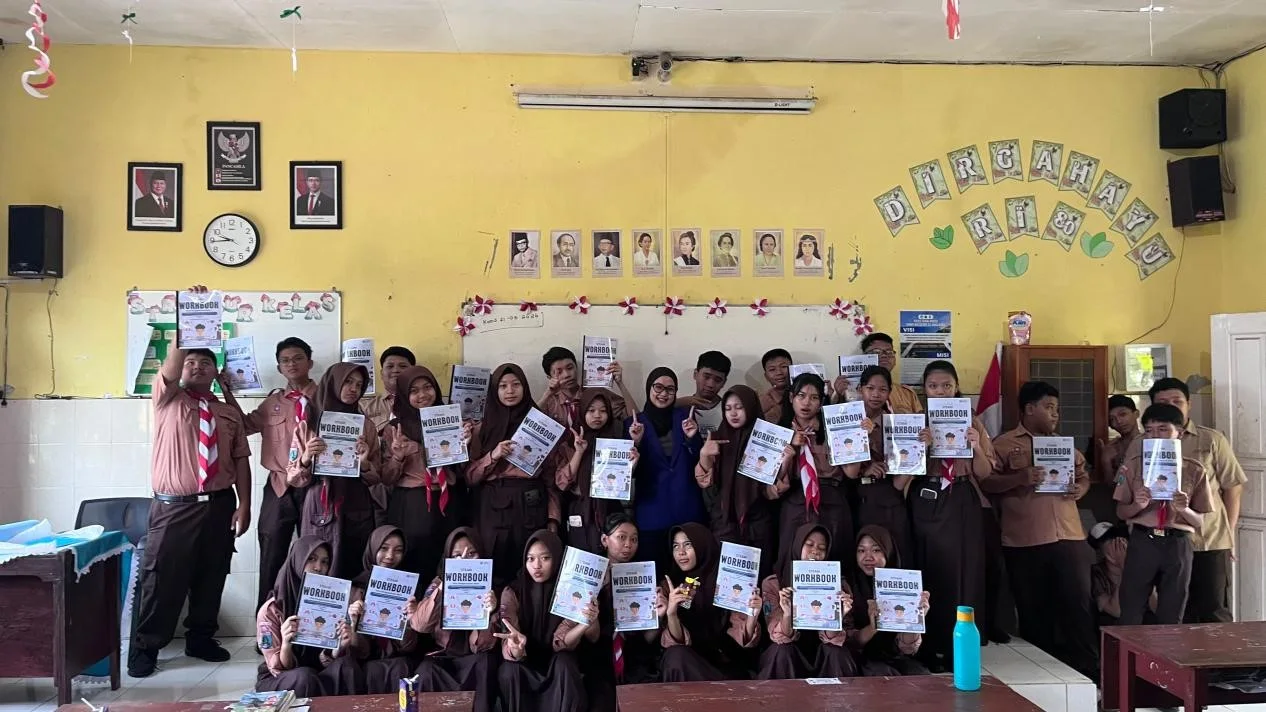
These opportunities were introduced to students at SMA Negeri 3 Pangkalpinang through a Department-Level Community Service (PMTJ) activity held by several lecturers from the Faculty of Social and Political Sciences (FISIP) at the University of Bangka Belitung (UBB) on Saturday (9/26/2026).
Under the theme “Digital Entrepreneurship for Youth: E-Commerce and Export Strategy Training for High School Students,”this activity equipped students with insights into digital entrepreneurship, ranging from domestic e-commerce marketing to opportunities for reaching consumers in the international market.
The training did not merely position technology as a sales tool. Students were also introduced to the potential of using digital spaces to develop creativity and the potential of Bangka Belitung's signature products.
Heritage products, handicrafts, and local arts are considered to have the potential to be introduced to a wider market if packaged and marketed with the right strategy.
The service team was led by Kharis Kurnia, S.E., M.Si., alongside Mirah Satria Alamsyah, M.A., J.D., and Apsas Saputra, S.A.P., M.A.P.
The activity also involved two UBB students, Rafi and Bintang, who are alumni of SMA Negeri 3 Pangkalpinang. Their involvement helped foster a closer connection between the university environment and the high school students.
Learning E-Commerce and Export Strategies
The training material was divided into two sessions. In the first session, Apsas Saputra discussed sales strategies through local e-commerce platforms.
Students were introduced to the use of digital channels to reach domestic consumers, including how e-commerce can be used as a starting point for developing a business.
In the following session, Kharis Kurnia presented material on sales and export strategies using global e-commerce platforms.
In addition to being an International Relations lecturer, Kharis has approximately seven years of experience in export activities utilizing global electronic commerce platforms.
This experience was used to provide students with a practical overview of how products from Indonesia can be introduced and sold to consumers in other countries.
According to Kharis, the entrepreneurial opportunities for the younger generation do not need to stop at the local or national market.
“We want students to see that entrepreneurial opportunities do not have to stop at the local market. By utilizing e-commerce, heritage products, handicrafts, and Bangka Belitung's signature arts have the space to be introduced to the international market.”
Introducing digital entrepreneurship at the high school level is expected to encourage students to view technology as more than just a means of communication and entertainment.
The younger generation can also take on the role of business actors by utilizing technology to create products, build markets, and generate economic value.
Students Encouraged to Look at Wider Markets
The Principal of SMA Negeri 3 Pangkalpinang, Suryadi, M.Pd., welcomed the activity positively. According to him, the material presented provided students with a new perspective on the vast entrepreneurial opportunities in the era of digital trade.
“Entrepreneurial opportunities are not limited to the Pangkalpinang or Indonesian market, but can also reach international markets such as the United States.”
The discussion during the training was quite active. Students asked various questions to the speakers regarding entrepreneurship, e-commerce, and the opportunities for marketing products abroad.
The interaction between the students and the service team did not end when the main session concluded. Several students continued to discuss directly with the speakers to learn more about business opportunities through digital platforms.
This enthusiasm shows that the issue of digital entrepreneurship has a distinct appeal for students, especially when linked to the opportunity to build a business without having to rely on the local market.
Bringing Local Potential to the Global Market
The development of e-commerce has made access to international markets increasingly open. However, entering the global market still requires an understanding of products, marketing, consumer behavior, and cross-border trade mechanisms.
Therefore, introduction at the school level can be a first step toward building literacy in digital entrepreneurship.
For students in Bangka Belitung, these opportunities can also be linked to the region's wealth of products and culture. Local products with a strong identity have the potential to gain new markets when combined with creativity, marketing skills, and the use of technology.
Through this activity at SMA Negeri 3 Pangkalpinang, FISIP UBB strives to bridge the gap between education and the rapidly evolving digital economy.
From the classroom, students were introduced to one important idea: products born in the region do not have to stay in the region. With the right knowledge, strategy, and use of technology, the reachable market can be far wider, extending beyond national borders.




Comments 0
Write a Comment Share your response