


JurnalPost.com - Every morning at the school gate, the laughter of students greets the sunrise. However, behind that warmth, there are sometimes faces that harbor silence. Some children arrive with bright enthusiasm, but many others appear gloomy, quiet, or choose to isolate themselves.
For an elementary school teacher, this dynamic is not just a routine sight, but a calling of the conscience. Every face carries a story, and behind changes in student behavior, there are often unmet emotional needs.
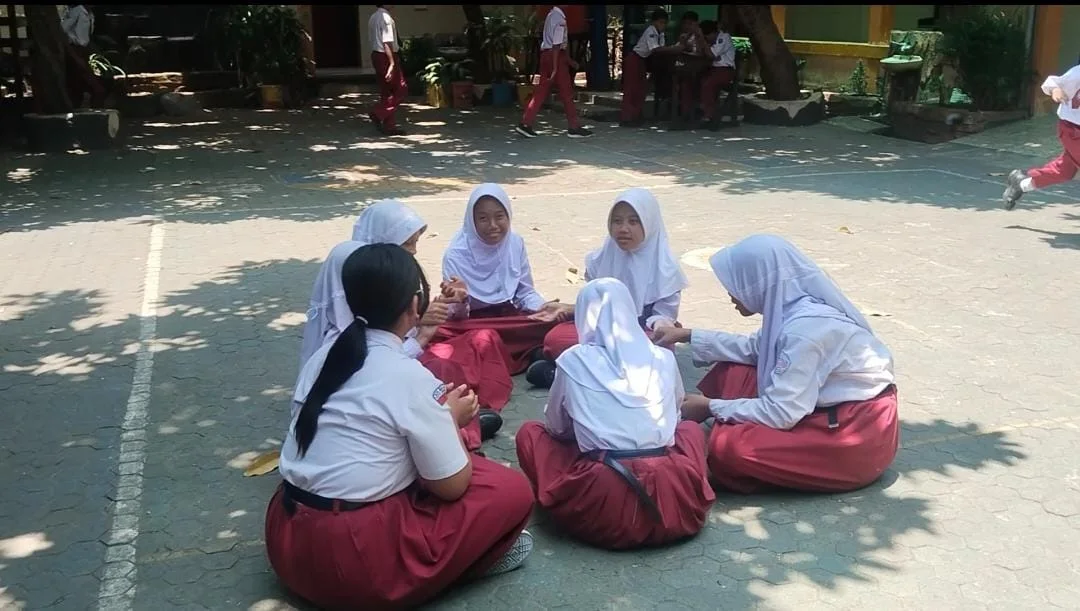
In a continuously developing city like Semarang, elementary schools serve as a meeting point for children from diverse social and economic backgrounds. At SD Negeri Bulu Lor, located in a densely populated residential area, we support children with a wide variety of life backgrounds.
Some children receive warm care at home, while others must face limited attention due to family economic pressures or even grow up in harsh social environments.
The reality on the ground shows that many elementary schools in Indonesia still lack dedicated Guidance and Counseling (BK) teachers. When emotional issues, behavioral problems, or symptoms ofbullyingarise, the responsibility for support often falls on the classroom teacher.
The absence of professional counselors in elementary schools is certainly no excuse to let children's issues develop into larger problems.
Departing from this awareness, I apply a care-based support approach called JELASH, which stands for Jeli (Observant), Empati (Empathetic), Luwes (Flexible), Aman (Safe), and Sepenuh Hati (Wholehearted).
Reading Signals and Empathizing
The first step of support begins with the keenness to observe small changes in student behavior. Children who suddenly daydream often, have difficulty concentrating, or show disruptive behavior by bothering friends are sometimes immediately labeled as naughty.
In reality, a quiet child is not necessarily indifferent, and a disruptive child is not necessarily just trying to cause trouble. Such behavioral changes can be signals of issues they are not yet able to express verbally.
Through an empathetic approach, classroom teachers strive to listen without rushing to judge. Investigation is carried out by gathering information wisely, both through student progress records from previous classes and through dialogue with parents.
However, opening communication with parents is not an easy matter. Diverse social environments present varied family conditions, including families with harsh and challenging life experiences.
In facing such situations, the safety and comfort of all parties must be a priority. Teachers are required to be wise, polite, and careful in building communication.
The main principle is that the approach to parents is not to blame or corner them, but to invite them to be partners in supporting the child's growth and development.
Building Synergy and a Safe Space
Counseling support in elementary schools cannot rely solely on interactions during classroom learning. The success of guidance is also determined by the school's ability to create an environment that is safe and comfortable for students.
A personal approach needs to be carried out without embarrassing the child in front of their peers. When they feel safe, valued, and accepted, children will find it easier to build trust in their teacher.
From that sense of trust comes the courage to share, express feelings, and reveal problems that have been kept hidden.
On the other hand, classroom teachers must also understand the limitations of their authority and capacity. Not all children's problems can be solved through simple support at school.
When facing cases that require special handling or professional assistance, collaboration with parties who have the competence and authority becomes an important step.
In practice, the school builds synergy with a number of relevant institutions. To support students with disabilities or children who need inclusive education services, the school collaborates with the Mental Revolution Ambassador House (RDRM).
Meanwhile, for cases requiring more comprehensive protection and recovery for the child, the school collaborates with the Semarang City Office of Women's Empowerment and Child Protection (DP3A).
This collaboration is part of an effort to ensure every child receives support, protection, and access to psychological services according to their needs.
Thus, support does not stop at the teacher's attention in the classroom but can be continued through the support of other parties who have expertise in handling children's issues.
Regrowing Inner Strength
The ultimate goal of guidance and counseling in elementary schools is not to make children dependent on the teacher's help. More than that, support aims to help students recognize their potential, understand their feelings, and regrow the strength within themselves.
When support is carried out consistently and wholeheartedly, positive changes can be seen gradually.
Students who were previously gloomy and withdrawn begin to be willing to interact with their friends. Children who were initially reluctant to speak slowly gain the courage to ask questions during lessons. They begin to rediscover the joy that had dimmed.
These changes may seem simple, but for a teacher, a child's courage to smile again, share, or trust their surroundings is a very meaningful achievement.
Supporting the growth and development of the nation's next generation requires the courage to be fully present in the lives of students. Education is not just a process of transferring knowledge through chalkboards and textbooks, but also a humanitarian effort to care for the soul, build character, and foster hope.
Through the keenness to read changes, empathy in listening, flexibility in attitude, the provision of a safe space, and wholehearted presence, the JELASH approach can be one of the simple yet meaningful steps in supporting elementary school students.
Because behind every child's face, there is a story that needs to be heard. Behind every behavioral change, there may be feelings that need attention.
And behind a teacher's care, there is always an open opportunity to help a child rediscover their self-confidence and hope for their future.


Comments 0
Write a Comment Share your response