

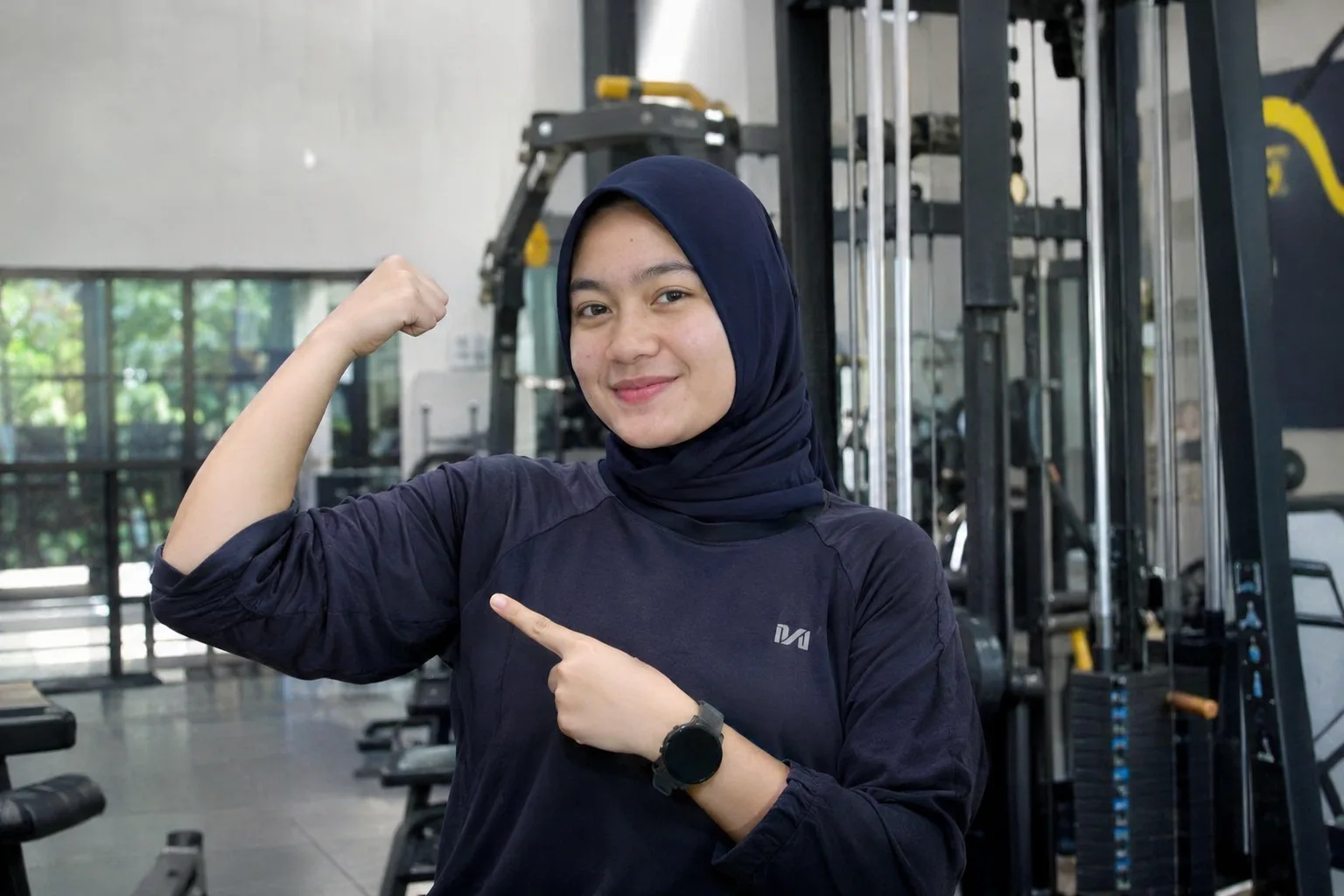
JurnalPost.com - Exercise is often considered one of the best ways to maintain physical health. Many people begin exercising regularly with the hope of having a stronger, fitter body and avoiding various diseases. Recently, the term muscle bankinghas emerged, referring to the effort to build and maintain muscle mass from a young age as a health reserve for old age.
However, have we ever considered that exercise, which is supposed to be healthy, could actually cause muscle damage?
This question is worth discussing because many people still assume that the more intense the exercise, the greater the benefits. Many push themselves to lift weights that are too heavy, exercise without rest, or continue training even when their bodies show signs of fatigue.
In reality, exercise is not just about how much we sweat or how heavy the weights we can lift are. What is far more important is how the body responds to that activity.
Muscle Banking: A Health Investment for the Future
The term muscle banking may sound simple, but it actually holds significant meaning for health. Muscles do not just function to move the body; they also play a role in maintaining balance, supporting daily activities, and helping regulate the body's metabolism.
As we age, muscle mass and strength tend to decline. This condition can increase the risk of physical frailty, balance disorders, and difficulty performing daily activities.
Therefore, building muscle strength early on is a crucial step. Much like saving money for future needs, maintaining muscle mass can be viewed as a long-term health investment.
One way to do this is through strength training, such as squats, push-ups, planks, or weightlifting. These activities provide stimulation to the muscles so they can adapt and become stronger.
The World Health Organization (WHO) recommends that adults engage in muscle-strengthening activities involving major muscle groups at least two days a week. This recommendation shows that strength training is an important part of a healthy lifestyle, not just an activity to sculpt an ideal body.
However, these benefits are certainly not obtained instantly. It requires consistency, training appropriate to one's ability, and sufficient recovery.
When Exercise Becomes a Threat to Muscles
Behind its benefits, exercise also carries risks if done excessively or with improper technique.
When performing physical training, especially strength training, muscles receive greater pressure or workload than usual. The body then adapts to that stimulus. With measured training and adequate recovery, muscle capacity can increase gradually.
Problems arise when someone applies a training load that is too heavy without considering their physical condition.
For example, someone who rarely exercises suddenly decides to do high-intensity weight training every day. Instead of getting stronger muscles in a short time, they risk injury, excessive fatigue, and recovery impairment.
Some people also consider muscle soreness after exercise as a sign that the training was successful. In fact, this assumption is not entirely true.
Muscle soreness that appears several hours to several days after training, known as Delayed Onset Muscle Soreness (DOMS), can occur when the body performs activities it is not yet accustomed to. However, pain is not the primary measure of training success.
Muscles can increase in strength without always being accompanied by pain.
In fact, under certain conditions, very heavy physical activity can cause serious muscle tissue damage called rhabdomyolysis. This condition can impair kidney function and requires immediate medical attention.
Therefore, severe muscle pain, unusual weakness, or dark-colored urine after physical activity should not be considered a normal complaint.
Rest Does Not Mean Being Lazy
One of the mistakes often made when starting an active lifestyle is ignoring rest time.
There is an assumption that exercising every day with high intensity will make muscles develop faster. In reality, the body also needs time to recover after physical activity.
Training provides stimulation for muscles, while the adaptation process takes place with the support of sufficient recovery. If the body is forced to work continuously without the opportunity to rest, the risk of injury and performance decline can increase.
In addition to rest, meeting nutritional needs plays an important role. Protein is needed to help the process of forming and repairing muscle tissue, while carbohydrates provide the energy needed during activity.
Adequate fluid intake, quality sleep, and a balanced diet are inseparable parts of exercise.
Thus, maintaining muscles is not just about what is done at the gym, but also how one treats their body after exercising.
Healthy Exercise Does Not Always Have to Be Heavy
In my opinion, one of the things that needs to change in society's perspective is the assumption that exercise must always be heavy to produce results.
We often see images of muscular bodies on social media that are then used as a standard for someone's success in exercising. As a result, some people are driven to follow others' training patterns without considering their own abilities and physical condition.
In fact, every individual has different needs and physical capacities.
For beginners, light to moderate exercise done consistently can be a good first step. Brisk walking, cycling, bodyweight training, or simple physical activities at home still provide health benefits.
Training intensity can be increased gradually as the body's ability improves. This approach is more logical than forcing heavy training just to obtain physical changes in a short time.
The most important thing is not who can lift the heaviest weight, but who can maintain the habit of moving safely and sustainably.
So, Are We Banking or Damaging Muscles?
Ultimately, exercise can be a means to bank muscle while also potentially damaging it. The difference lies in how we do it.
Planned exercise, tailored to one's ability, accompanied by balanced nutrition and sufficient recovery time, will help maintain muscle strength and function in the long term.
Conversely, excessive training, incorrect technique, and the habit of ignoring signs of fatigue can increase the risk of injury.
As a student in the health field, I believe that understanding safe exercise needs to be continuously improved. It is not enough to just encourage people to move; they also need to understand their body's limits and the importance of recovery.
Do not let the desire to have a healthy body make us ignore health itself.
Strong muscles are not built by forcing the body every day, but through proper training, consistency, and the opportunity to recover.
Therefore, from now on, let us make exercise a health investment, not a way to torture the body. Because the main goal of exercising is not just to be stronger today, but also to remain able to move well as we age.










Comments 0
Write a Comment Share your response