

GRESIK, JurnalPost.com – The development of tourism villages is not always an upward trajectory. Fluctuations in visitor numbers, the dynamics of management institutions, and destination management issues all determine whether village tourism can survive. This is the issue researched by Fitri Fadhilah, a lecturer in the Tourism Study Program at the Faculty of Social and Political Sciences, UPN “Veteran” East Java, in Sekapuk Village, Ujungpangkah District, Gresik Regency.
The study, titled “Analysis of Development Stages and Community-Based Governance of Sekapuk Tourism Village from the Perspective of the Tourism Area Life Cycle (TALC),” traces the destination's journey and how the community manages it amidst changing tourism conditions.
Sekapuk was initially popular for its Setigi tourism, which later rebranded as Sekapuk Smartland. This area was once a limestone mining site and was transformed into a tourist destination by utilizing the local landscape and resources. Its management is under the Village-Owned Enterprise (BUMDes).
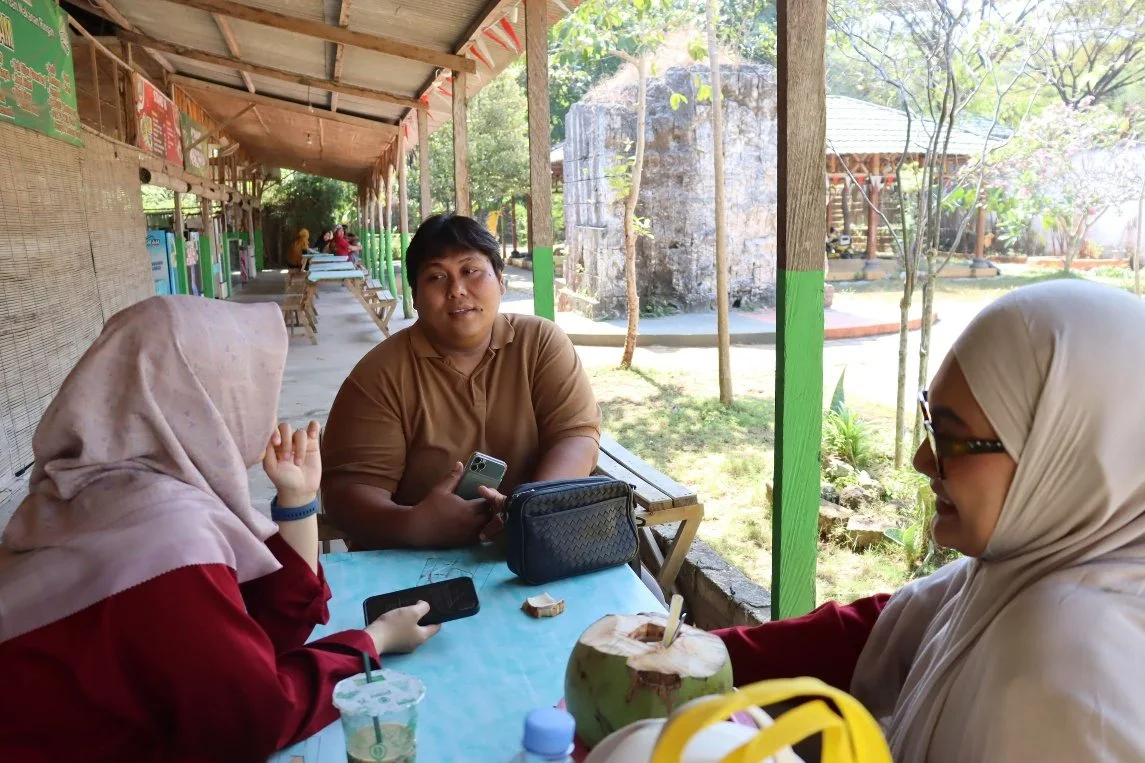
The research was conducted from June to October 2026 through field observations and in-depth interviews with a number of informants. Interviews were conducted with the Acting Head of BUMDes Sekapuk, Mr. Prasetyo as the Creative Division Head of Sekapuk Smartland, tourism destination managers, local business owners, and tourists visiting Sekapuk Smartland.
In addition to exploring the perspectives of managers and stakeholders, this research also involved eight tourists, consisting of four tourists from Gresik Regency and four from outside Gresik, as well as local business owners around the destination. This data collection aimed to obtain an overview of the actual condition of the destination, visitor experiences, management dynamics, and community involvement in tourism activities.
Destination in a Stagnation Phase
The main findings indicate that Sekapuk is currently in a stagnation phase, while continuously attempting rejuvenation. Characteristics include a fading appeal compared to previous times, declining visits, and a number of damaged facilities that have not been fully repaired. This means that past success does not automatically guarantee long-term sustainability. Nevertheless, tourism activities continue with a changing composition of visitors. School groups and institutions or companies still visit, opening opportunities to revive tourism products through a variety of new activities and strengthening market segments.
Governance and the Role of Residents
This research also highlights the institutional side. The transition of management from the village government to BUMDes, changes in leadership, and the fluctuations in public trust are considered to influence the sustainability of the destination. Good governance includes more than just managing facilities and attractions; it also involves institutional transparency, coordination between parties, community participation, and the equitable distribution of economic benefits. Within the framework of Community-Based Tourism, the institution's ability to restore trust, maintain resident involvement, and provide shared benefits is the deciding factor. Therefore, changing the name or polishing marketing strategies is not enough; governance improvements and institutional capacity building must go hand in hand.
Educational Tourism as a Path to Revitalization
The researcher sees educational tourism as an opportunity. The former limestone quarry can be used as a learning space for students, university students, and educational institutions. Visitors do not just recreate, but also understand environmental issues, landscape changes, local resource management, and community empowerment. To be successful, educational tourism needs to be supported by facility improvements, relevant tourism products, more targeted promotions, and collaboration between the village government, BUMDes, residents, and external parties.
This study confirms that the development of a tourism village is a dynamic process that demands the ability to adapt. TALC helps map the position of destination development, while the Community-Based Tourism approach emphasizes the importance of institutions and community involvement. The results are expected to serve as evaluation material for Sekapuk managers and stakeholders in formulating more adaptive, collaborative, and sustainable strategies. The goal is that tourism village development does not merely pursue the number of visits, but also strengthens institutions, preserves local potential, and improves community welfare.
These findings were presented at the International Seminar on Research and Management (ISRM) 2026 through the article “Sustaining Community-Based Tourism Amid Destination Transformation: The Case of Sekapuk Village, Gresik, Indonesia,” as an effort to broaden the dissemination of studies on the challenges and strategies for sustainable community-based tourism in Indonesia.
About the Research
This research is part of the research activities of lecturers in the Tourism Study Program at UPN “Veteran” East Java, which focuses on destination development, community-based governance, and tourism village sustainability. In addition to enriching tourism science, this study is expected to provide practical recommendations for managing destinations based on local potential.
Author: Fitri Fadhilah Sumiarsa, Tourism Study Program, UPN “Veteran” East Java.





Comments 0
Write a Comment Share your response