

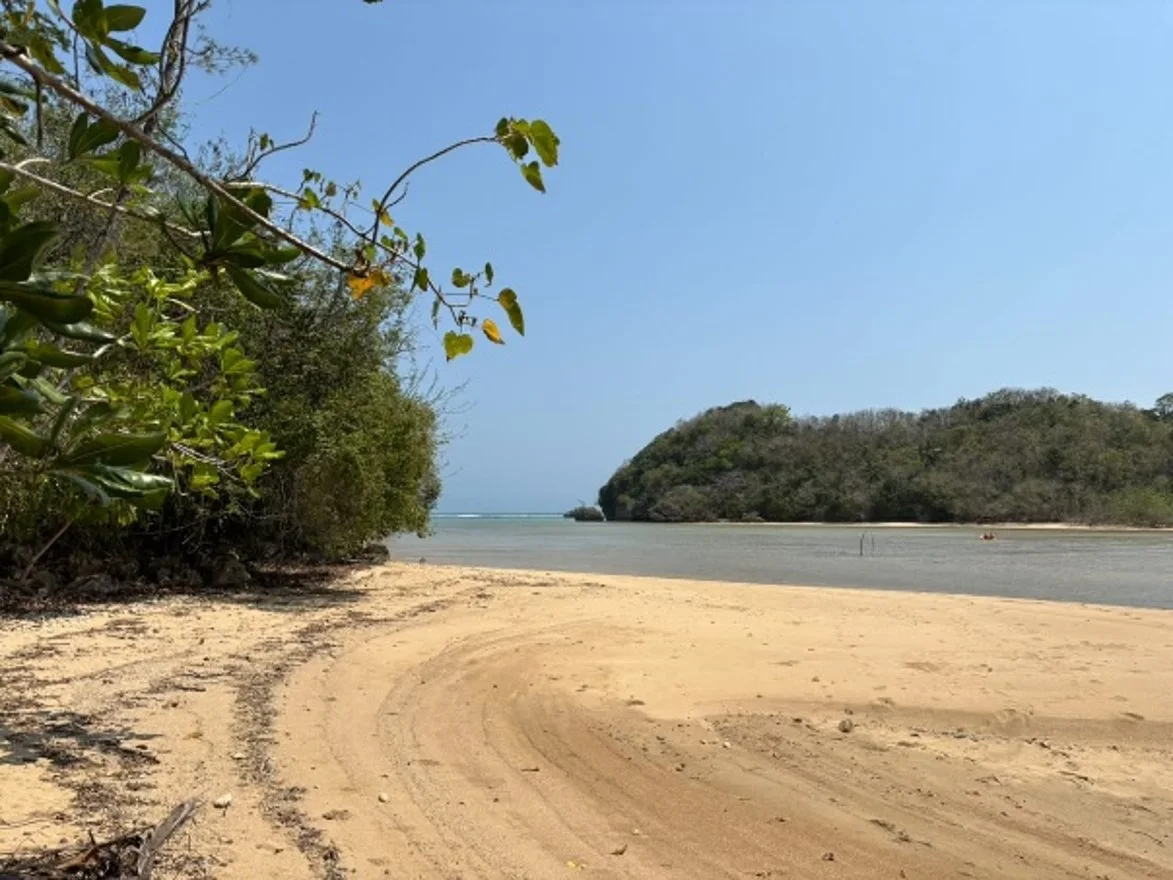
JurnalPost.com – The beauty of a beach is often the primary reason travelers visit a destination. Stretches of sand, clear seawater, and well-preserved natural scenery hold a unique appeal. However, beyond this charm, natural tourism areas also hold great potential as sites for learning about the environment and the importance of maintaining ecosystem sustainability.
One destination with such potential is the Clungup Mangrove Conservation (CMC) Tiga Warna, located in Tambakrejo Village, Sumbermanjing Wetan District, Malang Regency, East Java.
This ecotourism area offers a coastal experience that combines natural beauty, conservation efforts, and local community involvement. With these characteristics, CMC Tiga Warna has the opportunity to be further developed as an educational tourism destination that supports the principles of sustainable tourism.
CMC Tiga Warna and Coastal Conservation Potential
CMC Tiga Warna features six natural attractions: Clungup Beach, Gatra Beach, Sapana Beach, Mini Beach, Batu Pecah Beach, and Tiga Warna Beach. Each beach offers environmental characteristics that can serve as a means to introduce coastal ecosystems to visitors.
In addition to the beach areas, the CMC also includes a conservation area covering 96.3 hectares of coastal forest, 10 hectares of coral reefs, and 81.11 hectares of mangroves.
The existence of these ecosystems demonstrates that the CMC area is not merely a recreational site, but a vital space for coastal environmental protection.
Research by Husamah and Hudha (2018) shows that the management of CMC has implemented several community-based ecotourism principles. These principles include environmental conservation, community participation, economic benefits, education, and tourism activities.
These findings serve as a basis for exploring opportunities to develop the CMC into a destination that not only provides a travel experience but also encourages increased knowledge and visitor awareness regarding environmental sustainability.
Developing Environmental Education through Tourism Experiences
One of the main potentials of the CMC lies in utilizing the coastal environment as a medium for direct learning.
Mangrove ecosystems, for example, can be introduced to tourists through explanations regarding the benefits of coastal vegetation in protecting shorelines, providing habitats for various organisms, and supporting environmental balance.
Visitors can also learn about the relationship between mangrove preservation and efforts to address climate change.
Such learning is more engaging when delivered through environmental observation activities, educational information boards, and guidance from local guides who understand the area's characteristics.
Thus, tourists do not just witness natural beauty but also gain an understanding of the ecological processes that keep the area preserved.
Beyond knowledge of ecosystems, educational tourism can also instill responsible behavior during visits.
Simple habits such as not littering, reducing the use of single-use plastics, keeping the beach clean, following visitor rules, and not damaging natural habitats are essential parts of sustainable tourism practices.
However, the delivery of rules should not stop at prohibitions. Tourists need to understand the reasons behind each regulation so that environmental awareness grows from understanding, rather than merely as an obligation.
The Role of the Local Community in Sustainable Tourism
Community-based conservation area management is one aspect that can enrich the educational experience at CMC Tiga Warna.
The involvement of the local community demonstrates that environmental protection can go hand-in-hand with economic activities.
Through tourism management, the community has the opportunity to benefit from various activities, such as guide services, visitor services, and other supporting economic activities.
This experience can serve as learning material for tourists regarding the relationship between conservation, social participation, and community welfare.
In this context, the success of a tourist destination is not sufficiently measured by the number of visits or the amount of revenue.
Success must also be viewed from the management's ability to maintain environmental quality, reduce the negative impacts of tourism activities, and ensure that economic benefits are felt responsibly by the surrounding community.
This approach is important so that the growth of the tourism sector does not threaten the natural resources that are the main attraction of the destination.
Conservation Learning Paths as Educational Tourism Innovation
One idea that can be considered to optimize the educational potential of the CMC is the development of conservation learning paths.
This path can be designed with several visit points that provide information regarding ecosystem characteristics, mangrove functions, threats to environmental damage, and conservation practices applied in coastal areas.
Each learning point can be equipped with interpretation boards, thematic maps, digital media, or direct explanations from tour guides.
The use of simple and communicative media will help visitors understand the material without feeling like they are attending a formal class.
Furthermore, strengthening the capacity of local guides is an equally important factor.
Guides do not just play a role in showing tourist locations, but can also act as environmental information providers capable of connecting the tourism experience with conservation knowledge.
Training in educational communication, environmental interpretation, and the preparation of learning materials can be a step toward improving the quality of these services.
Local community knowledge regarding natural conditions and the history of area management also needs to be given space in the preparation of educational programs.
In this way, the development of educational tourism can strengthen the role of the community while maintaining local values that have supported the sustainability of the area.
The Importance of Collaboration and Educational Program Evaluation
Developing the CMC as an educational tourism destination requires cooperation from various parties, ranging from management, the community, local government, universities, schools, to environmental observer communities.
Universities can play a role through research, the preparation of learning modules, and mentoring for educational activity management.
Meanwhile, schools have the opportunity to make the conservation area a location for field learning to introduce coastal ecosystems and environmental responsibility from an early age.
The government and other stakeholders can support the improvement of human resource capacity, the development of educational facilities, and the strengthening of conservation programs integrated with regional tourism.
Nevertheless, the development of educational programs also needs to be accompanied by measurable evaluations.
Assessments can be conducted through visitor feedback, observation of behavioral changes during the visit, or measuring understanding before and after participating in activities.
Such evaluation is necessary to determine whether the program truly provides learning benefits or merely becomes an additional activity in a tour package.
Making Conservation Part of the Tourism Experience
The potential of CMC Tiga Warna as an educational tourism destination shows that tourism and conservation do not have to run separately.
Both can reinforce each other if the tourism experience is designed to build understanding, foster concern, and encourage more responsible behavior toward the environment.
Through the development of educational materials, capacity building for local guides, community involvement, and collaboration among various parties, the CMC area has the opportunity to present a more meaningful tourism experience.
Ultimately, sustainable tourism is not just about enjoying the beauty of nature today, but also about ensuring that the same ecosystem remains preserved and can be enjoyed by future generations.






Comments 0
Write a Comment Share your response