

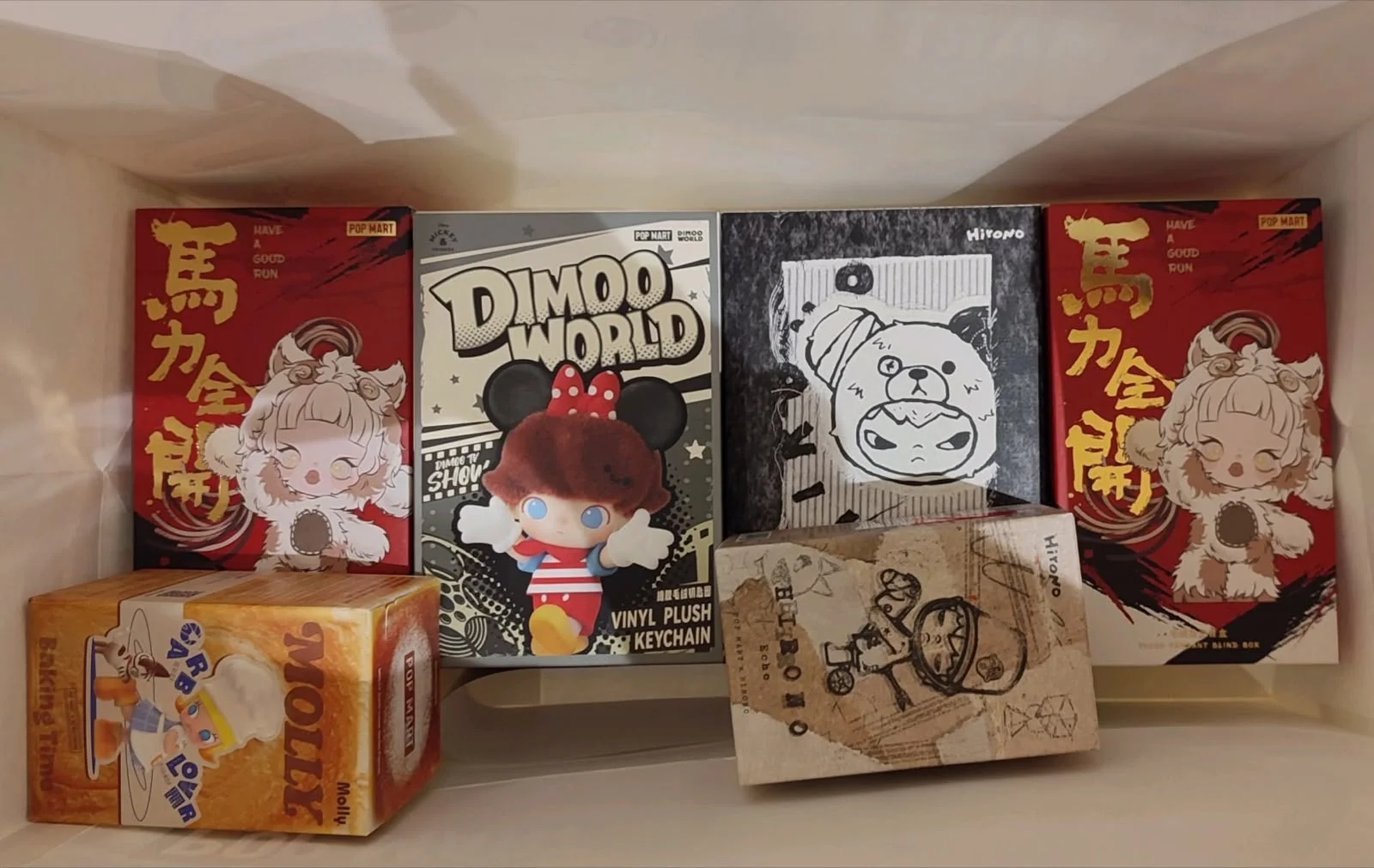
Eckhart Tolle wrote a reflective sentence:
“Every addiction starts with pain and ends with pain.” — Eckhart Tolle.
This expression is not merely an aphorism, but a description of how the human brain responds to pain and seeks an escape. When we hear the word addiction, our minds often turn to illicit drugs or alcohol. In reality, in the modern era, behavioral addiction can manifest in forms that are far more flexible and socially acceptable, one of which is the phenomenon of adolescent obsession with blind boxes.
In biopsychological studies, the phenomenon of addiction is not limited to substance abuse but also encompasses compulsive behaviors such as compulsive shopping. In the current era, this phenomenon can be found among adolescents and Gen Z through the trend of collecting blind boxes.
Purchases initially intended as a form of self-appreciation or self-reward, risk becoming a negative habit that develops into compulsive behavior.
The Three-Level Transition Hierarchy of Blind Box Addiction
1. Level 1: Positive Habit (Self-Reward & Natural Dopamine Activation)
Habit is defined as a repetitive behavior that can be controlled by individuals with normal mental conditions. At the initial stage, adolescents purchase blind boxes in a measured way as a self-reward (to feel good) after completing something they find difficult.
The satisfaction of opening the box can involve dopamine activity, a neurotransmitter that helps regulate movement, motivation, focus, memory, mood, and the brain's reward system, including in the nucleus accumbens as part of the natural rewardsystem.
This pleasant sensation is then associated with memory formation involving the hippocampus. At this stage, control involving the prefrontal cortex is still functioning, so purchasing decisions remain rational and controlled.
2. Level 2: Negative Habit (Self-Medication & Emotional Pain Trigger)
Behavior that was initially positive can become a negative habit when the motivation shifts to self-medication (to feel better).
Individuals begin buying blind boxes without any specific reason, such as when simply passing a store, feeling empty, fearing missing out on trends, or driven by social anxiety due to social comparison on social media.
When seeing a store display or a collection post, an emotional response involving the amygdala can trigger a strong urge to buy. Self-control involving the prefrontal cortex can become increasingly difficult to maintain as the frequency of purchases increases to alleviate emotional stress.
3. Level 3: Addiction Compulsion (Hijacked Circuit)
The uncertainty of the character obtained in each purchase creates a pattern of variable intermittent reinforcement, which is reinforcement provided unexpectedly.
This mechanism can drive individuals to continue repeating purchases because there is always a possibility of getting the desired character. As the behavior repeats, the urge to buy can become increasingly difficult to control.
Individuals no longer buy solely to obtain pleasure, but remain driven to purchase even while realizing the negative consequences, such as excessive spending or financial difficulties.
In this condition, the ability for self-control and consideration of decision consequences involving the prefrontal cortex can be impaired.
As a result, the activity of buying blind boxes has the potential to develop into a compulsive behavior that repeats continuously and causes new problems, such as financial crises, anxiety, guilt, and regret.
Conclusion
The phenomenon of compulsive blind box purchasing shows that behavioral addiction can be related to shifts in action patterns and an individual's difficulty in regulating emotions.
Although the brain's neurochemical reactions play a role in providing a pleasurable sensation, the underlying problem may lie in the loss of self-control over shopping habits. Actions that start from rational decisions gradually have the potential to turn into compulsions due to relying on physical goods to cover up feelings of emptiness.
When adolescents become accustomed to making shopping for goods an emotional shortcut, they risk eroding their own psychological resilience.
Ultimately, this compulsive shopping behavior no longer focuses on the aesthetics of the figures purchased, but becomes a ritual performed to escape from inner discomfort.
Nevertheless, the hobby of collecting blind boxes does not automatically indicate an addiction. The loss of self-control and the emergence of negative impacts on daily life are important aspects that need to be observed.
Suggestions
Breaking the cycle of compulsive behavior requires concrete improvements in daily habits and emotional management strategies.
1. Implementing Behavioral Friction
Creating barriers between the emergence of impulsive urges and the act of shopping. Adolescents are advised to try implementing a pause rule of 48 hours before buying to see if they truly need and want the item.
2. Developing Non-Consumptive Emotional Coping
Replacing the mechanism of self-medication through shopping with non-transactional emotional regulation techniques, such as emotional journaling, physical activities, and real social interactions to overcome feelings of emptiness.
3. Reducing Exposure to Digital Triggers (FOMO Control)
Limiting exposure to unboxingcontent, hauls, or collection posts on social media that often trigger social comparison.
Instilling the awareness that acceptance and self-worth are not determined by the ownership of viral items.
4. Improving Consumer Behavior Literacy
Educational institutions and parents need to build adolescent critical thinking regarding marketing strategies that exploit reward uncertainty and product scarcity, such as the mystery boxsystem, so that adolescents are not easily trapped in uncontrolled consumptive behavior.
Bibliography
Bear, M. F., Connors, B. W., & Paradiso, M. A. (2020). Neuroscience: Exploring the Brain (4th ed.). Wolters Kluwer.
Eisenberger, N. I. (2012). The pain of social disconnection: Examining the shared neural underpinnings of physical and social pain. Nature Reviews Neuroscience, 13(6), 421–434.
Koob, G. F., & Volkow, N. D. (2016). Neurobiology of addiction: A neurocircuitry analysis. The Lancet Psychiatry, 3(8), 760–773.








Comments 0
Write a Comment Share your response