

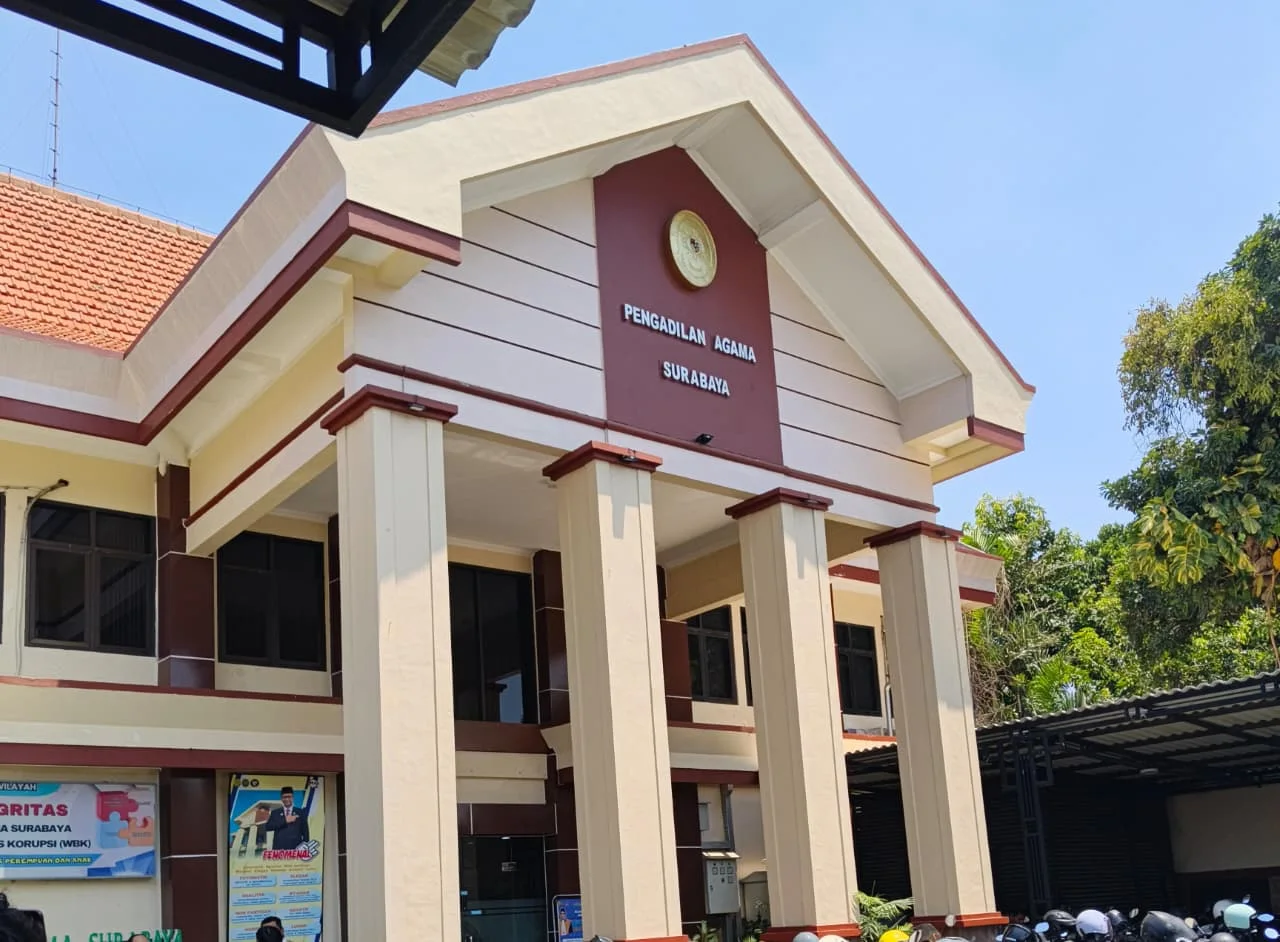
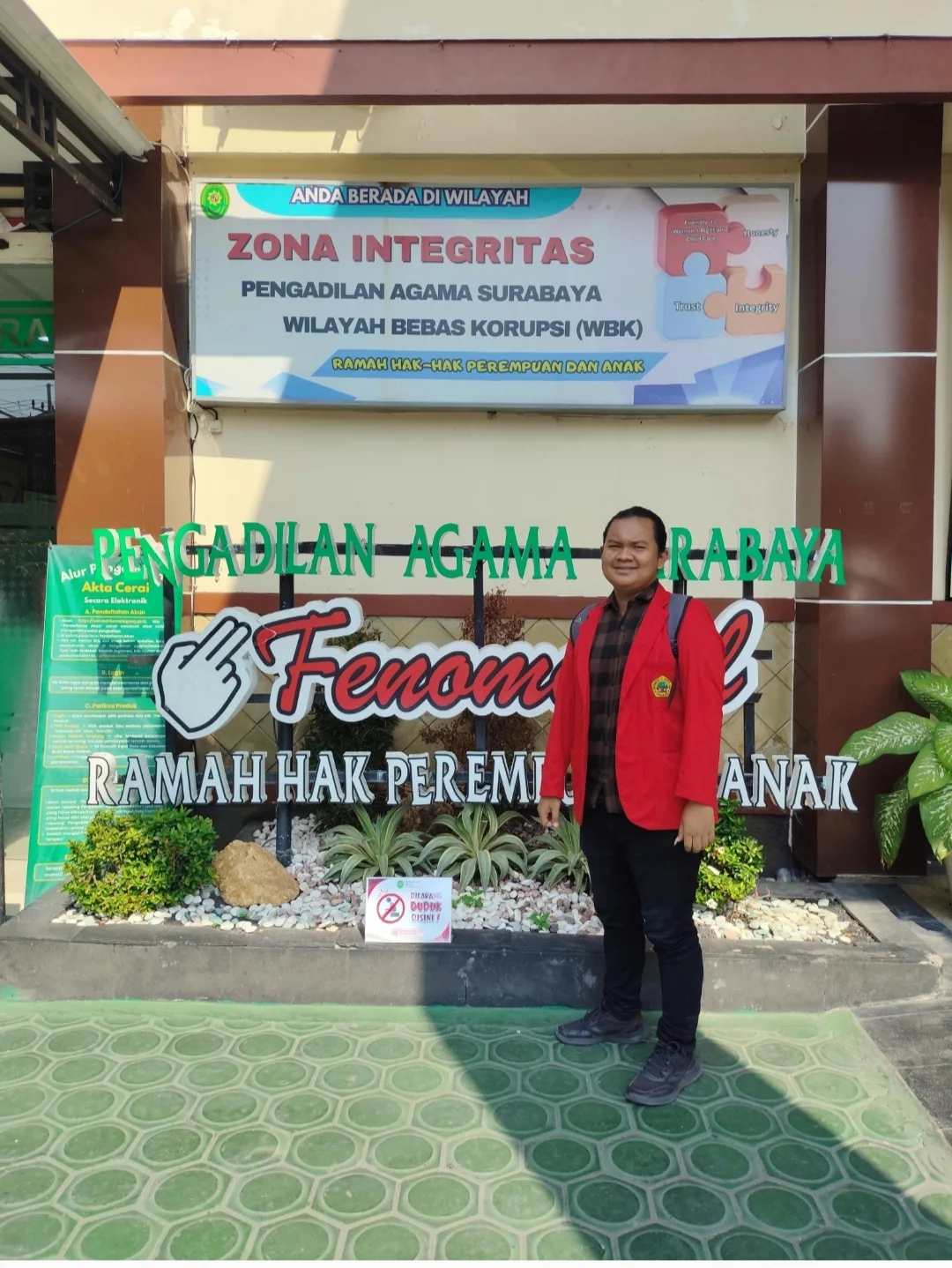
Surabaya, JurnalPost.com - The Legal Skills Training (PLKH) program for Religious Court Litigation provides students with the opportunity to directly understand the application of procedural law within the judicial environment. One such activity involved observing proceedings at the Surabaya Religious Court on Monday, October 5, 2026.
During this session, students observed the examination of a 'cerai talak' (divorce petition filed by the husband) case in Courtroom 2, which had reached the evidentiary stage through witness testimony.
Given that divorce cases are heard in closed sessions as stipulated in Article 68 paragraph (2) of Law Number 7 of 1989 concerning Religious Courts, this observation is presented in general terms without disclosing the identities or personal details of the parties involved.
Observing the Evidentiary Process in Court
The hearing was presided over by a panel of three judges. At the beginning of the session, the panel confirmed that the agenda was to present evidence through witness testimony.
Before the examination began, the judge verified the completeness of the case file and inquired about any additional evidence the parties intended to submit.
Once it was confirmed that no further evidence would be presented, the examination proceeded with the swearing-in of the witnesses.
This stage is a crucial part of civil procedural law, as witness testimony provided under oath serves as a form of evidence that judges may consider when examining and deciding a case.
During the examination, the panel of judges gathered information regarding the domestic conditions of the parties prior to their separation.
The questions posed related to recurring disputes and arguments, including the underlying circumstances that led to the breakdown of the marriage.
The panel also inquired about the presence of children from the marriage. This is a significant concern because divorce does not only involve the dissolution of the marital bond but also raises legal consequences regarding child custody, care, and support.
Judges Emphasize Obligations for Iddah Alimony
One part of the hearing that drew the students' attention was when the panel of judges discussed the obligations arising from a 'cerai talak', specifically the provision of alimony during the 'iddah' (waiting) period.
Provisions regarding these obligations are regulated, among others, in Article 149 of the Compilation of Islamic Law (KHI), taking into account applicable requirements and exceptions.
During the examination, the judge asked the party responsible for providing alimony about their financial capacity. When the proposed amount was deemed insufficient for daily living needs, the panel issued a firm reprimand.
All three judges showed concern regarding the amount of alimony discussed, ensuring that the obligation was not merely fulfilled formally, but also considered the circumstances and needs of the recipient.
This moment provided insight that judges do not merely follow procedural steps. The panel also bears the responsibility of considering aspects of justice and the protection of the parties' rights, especially in cases involving family life.
Courtroom Atmosphere and High Caseloads
In terms of execution, the examination took place in a formal yet not entirely rigid atmosphere. Between examinations, the panel of judges occasionally made light comments, making the proceedings feel more communicative.
This demonstrated that handling family cases requires an approach that is not only oriented toward legal provisions but also attentive to the human conditions of those involved.
Outside the courtroom, the activity at the Surabaya Religious Court appeared quite intense. Even before the observation began, several litigants were already waiting for their turn in the court hallways.
The queues remained visible until the lunch break. The high volume of people arriving illustrates the significant demand for services and case handling within the religious court system.
During the observation, students also witnessed how the panel of judges and court staff handled cases in succession with relatively short intervals.
After one examination concluded, the next hearing could begin within just one or two minutes.
This condition reflects a demanding work rhythm for judges, clerks, and court staff involved in ensuring the smooth operation of the proceedings.
When the lunch break arrived, the judges were seen quickly leaving the courtroom to rest before returning to continue the case examination agenda.
Direct Learning on Procedural Law Practice
This observation activity provided students with essential experience in understanding the relationship between the procedural law theory learned in the classroom and its application in judicial practice.
The stages of evidence, witness swearing, examination of domestic dispute facts, and considerations regarding alimony obligations are all parts of the legal process that can be learned firsthand.
The observation also demonstrated that handling divorce cases is not merely an administrative matter or the application of articles in legislation.
Behind every case lie family issues, responsibilities, and rights and interests that must be carefully considered by the panel of judges.
Through the Religious Court Litigation PLKH program, students gained an understanding that the judicial process demands precision in applying the law, the ability to evaluate evidence, and sensitivity toward the aspects of justice for the parties involved.
This experience is expected to strengthen the students' insights and readiness in understanding legal professional practice, particularly within the religious court environment.






Comments 0
Write a Comment Share your response