

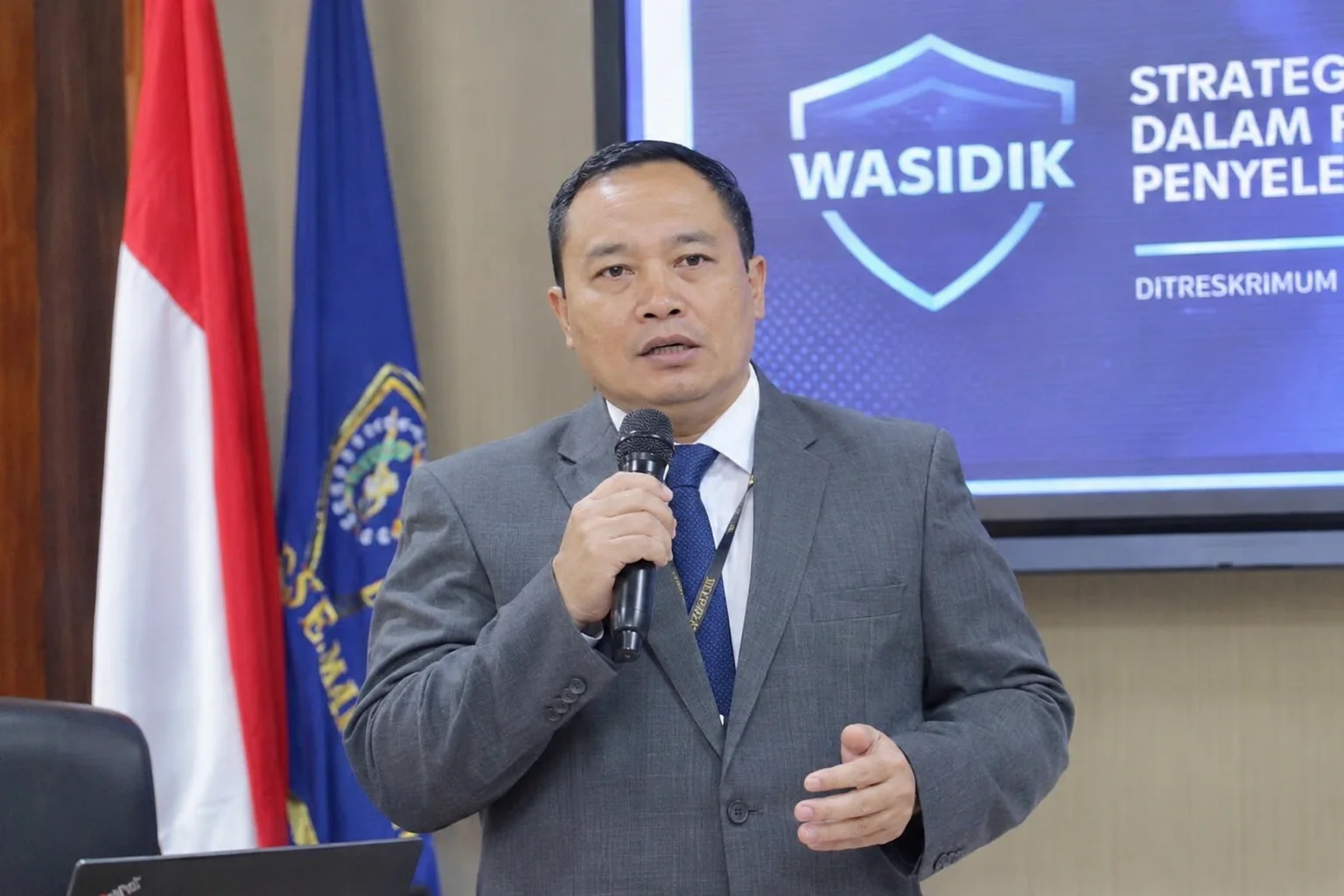
BANDUNG, JurnalPost.com - Efforts to improve the quality of public complaint handling remain a priority in strengthening police service governance. One such initiative is the implementation of the WASIDIK Control Model within the Criminal Investigation Directorate (Ditreskrimum) of the West Java Regional Police.
This innovation was initiated by AKBP Solihin Surabagja, S.P., as part of a change project for the National Leadership Training (PKN) Level II, Batch XXVI for the fiscal year 2026.
Under the theme Implementation Strategy of the WASIDIK Control Model in Improving the Quality and Certainty of Public Complaint Resolution at the West Java Regional Police Criminal Investigation Directorate, this project is designed to build a more structured, transparent, and accountable system for managing complaints.
Public complaints, or 'Dumas', serve as a vital source of information for identifying various issues within law enforcement services.
However, the handling process requires more than just receiving reports and providing follow-ups. Each complaint necessitates clarity regarding the substance of the issue, the responsible parties, handling steps, progress, and final outcomes.
This need forms the basis for developing the WASIDIK Control Model as an approach to strengthen oversight while ensuring that every complaint is managed through a monitorable and evaluable mechanism.
Public Complaints as a Priority for Reform
Based on a problem mapping exercise using the ASTRID approach presented in the change project document, three primary issues were identified.
Issues related to public complaints received the highest priority score of 97. Meanwhile, issues related to conventional crimes scored 78, and personnel capacity scored 64.
These mapping results highlight the suboptimal quality and lack of certainty in resolving public complaints as a priority issue requiring immediate attention.
This condition underscores the importance of building a control mechanism that not only records the volume of complaints but also ensures that every resolution process adheres to established regulations.
Through a more structured system, the progress of complaints is expected to be clearly trackable, from the initial receipt of information to final resolution.
WASIDIK Control Model Promotes Integrated Oversight
The WASIDIK Control Model was developed as a strategy to transform public complaint governance into an adaptive, transparent, and accountable system.
In the change project design, the innovation begins with the issuance of a West Java Regional Police Chief Decree to serve as a policy framework.
This policy is then translated into technical tools to provide clear guidelines for handling complaints.
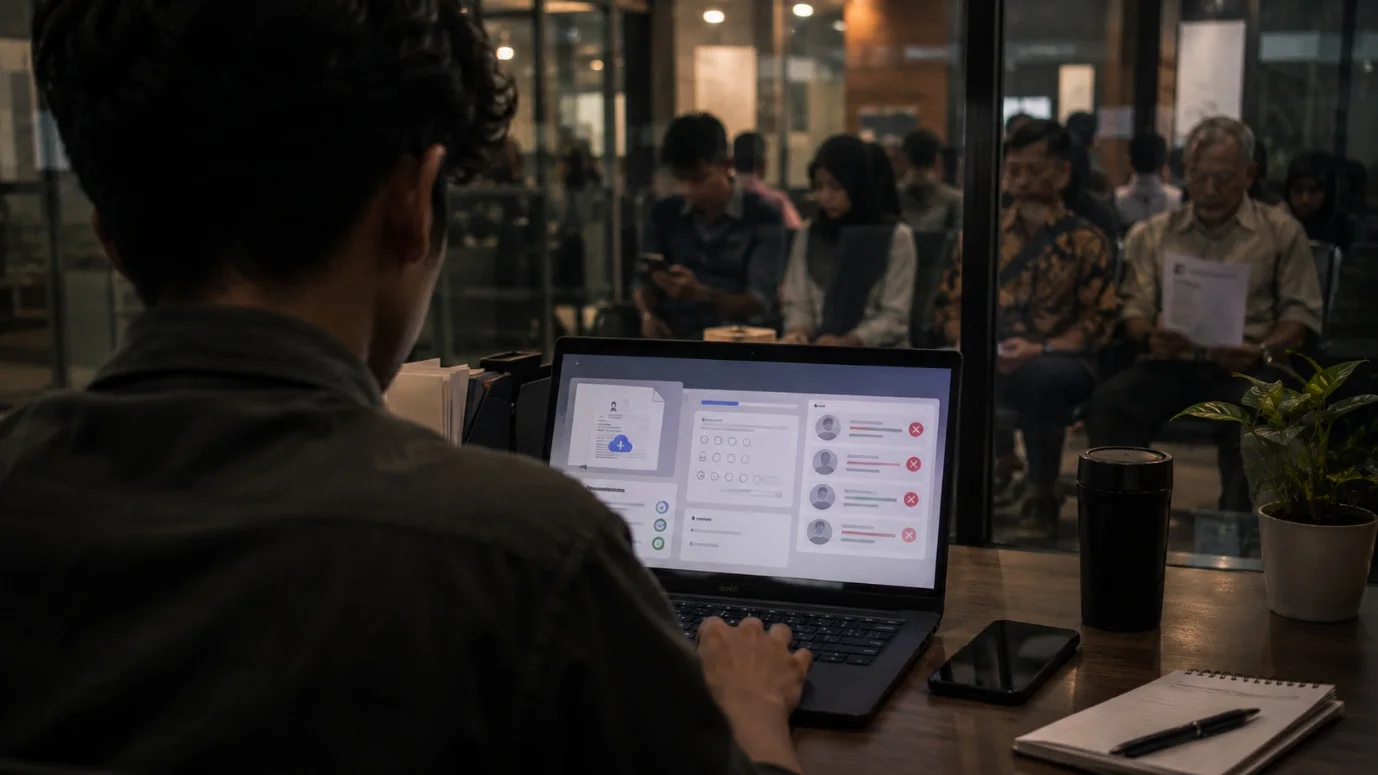
The tools developed include technical guidelines for handling Dumas, standard operating procedures (SOPs) for closed-loopprocesses, complaint classification instruments, expert engagement protocols, lesson noteformats, and a dashboard to monitor the progress of public complaint resolution.
The closed-loop approach is a critical component of the design, emphasizing the need for control until the follow-up process is officially declared complete.
With this mechanism, complaint resolution is expected to extend beyond mere recommendations to include monitoring of implementation, document completeness, and clarity of results.
Meanwhile, the monitoring dashboard is designed to provide systematic information on complaint progress.
Information regarding deadlines, obstacles, and follow-up actions is intended to be accessible to those with oversight authority.
Providing Benefits for Investigators and the Public
The implementation of the WASIDIK Control Model is designed to benefit various stakeholders involved in the complaint handling process.
For Bagwassidik personnel, the more structured information is expected to simplify data tracking and report compilation.
This system is also intended to reduce the time required to search for information and compile summaries of complaint handling.
For leadership and supervisors, the availability of progress updates, deadlines, and handling obstacles is expected to accelerate oversight decision-making.
For investigators and related units, the design emphasizes the importance of clear responsibilities, deadlines, and evidence of recommendation implementation.
Through a more organized mechanism, repeated requests for clarification and the return of incomplete documents are expected to decrease.
Benefits are also directed toward the public as the complainants.
Through official channels, complainants are expected to obtain progress updates more easily without having to repeatedly visit the police station just to check the status of their reports.
This ease of access to information has the potential to reduce the time and costs incurred by the public while tracking their complaints.
At the organizational level, recording problem-solving experiences through lesson notes is expected to serve as a basis for learning and future service improvements.
Involving Various Stakeholders
The successful implementation of the WASIDIK Control Model requires support from various parties, both internal to the police and external stakeholders.
In the change project document, stakeholder mapping was conducted to identify parties with influence and interest in the innovation's implementation.
Internal parties include the leadership of the West Java Regional Police, the Ditreskrimum ranks, Bagwassidik, investigators, and related units.
Meanwhile, external stakeholders include academics, multidisciplinary experts, professional organizations, and the public.
The mapping also displays the shift in stakeholder positions before and after the engagement strategy in the change project.
Through coordination, consultation, and targeted information dissemination, support from various parties is expected to strengthen the application of the complaint control system.
Strengthening Accountability in Complaint Handling
The development of the WASIDIK Control Model is an effort to drive improvements in law enforcement service governance through a more measurable oversight system.
Beyond emphasizing speed, this innovation places resolution certainty as a crucial aspect of public service.
Evaluation of its implementation is designed through several indicators, such as report provision time, information completeness, the number of document correction requests, and the efficiency of time and costs experienced by complainants.
These indicators can serve as a basis for assessing the benefits of implementation once the system is operational.
Through the change project initiated by AKBP Solihin Surabagja, the West Java Regional Police's Ditreskrimum is expected to possess a more orderly, documented, and accountable mechanism for managing public complaints.
Ultimately, the success of this innovation will be determined by consistent execution, the effectiveness of oversight, and its ability to provide clarity and certainty for the public who submit complaints.






Comments 1
Write a Comment Share your response