


JurnalPost.com Forest and land fires are not merely an annual disaster that arrives with the dry season. This phenomenon reflects serious issues in environmental governance that have yet to be fully resolved in Indonesia.
Every dry season, fires threaten thousands of hectares of forest and land, destroying biodiversity and releasing carbon emissions into the atmosphere. The resulting haze not only disrupts economic activity and public mobility but also threatens the health of millions of residents, especially those living near affected areas.
The issue of forest and land fires cannot be understood solely as a result of hot weather or low rainfall. Behind these events lie more complex problems, ranging from the degradation of peat ecosystems and economic interests to weak oversight and challenges in law enforcement.
Therefore, efforts to address these fires require a comprehensive approach that combines scientific understanding of ecosystems, economic considerations, and the courage to implement fair and sustainable environmental policies.
Unraveling the Roots of Forest and Land Fires
One factor exacerbating forest and land fires in Indonesia is the degradation of peat ecosystems. Peatlands have the capacity to store large amounts of water and carbon. However, when these areas are drained through canal construction or uncontrolled land-use changes, their moisture levels drop and the risk of fire increases.
Dried peat becomes highly flammable. Fires can even spread to the subsurface layers, making them difficult to detect and extinguish.
This condition shows that environmental damage is not just a matter of lost vegetation cover, but also involves changes to the structure of ecosystems that have formed over thousands of years.
Meanwhile, land clearing by burning remains a problem because it is considered faster and cheaper than non-burning methods. This practice demonstrates how short-term economic gain can override long-term environmental impacts.
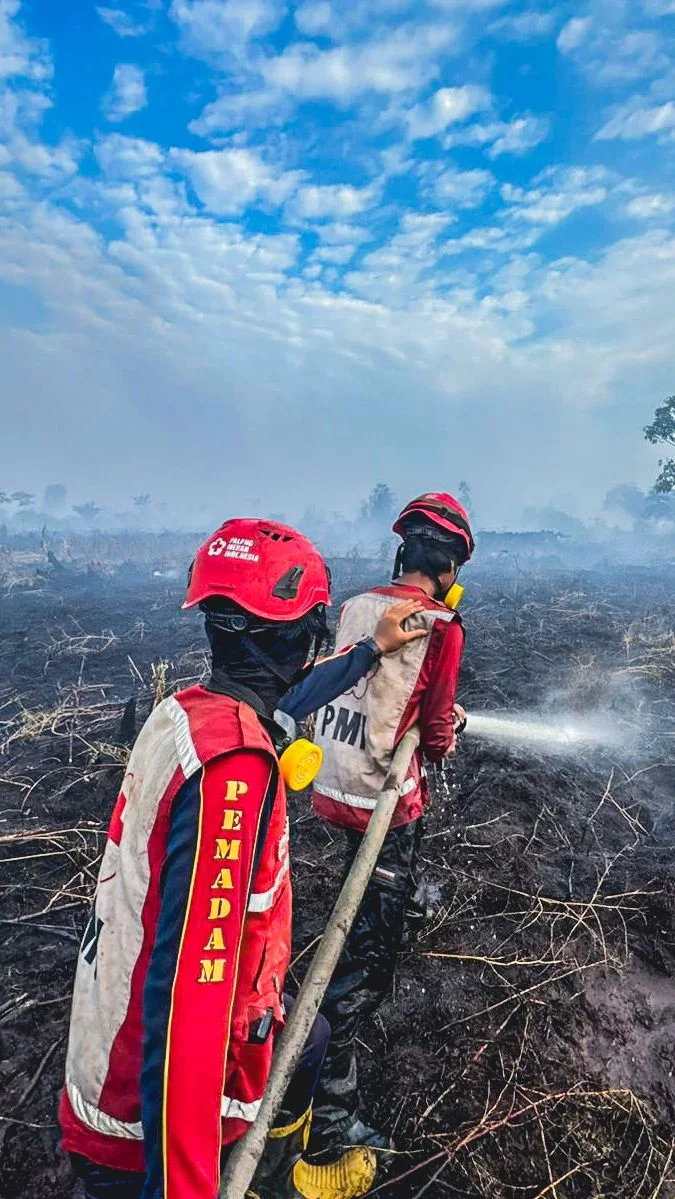
Professor Bambang Hero Saharjo of the Faculty of Forestry and Environment at IPB University has emphasized the significant influence of human activity on fires in Indonesia in various studies and explanations.
"In Indonesia, 99.9 percent of the causes are human-related," Bambang stated in an explanation regarding forest and land fires published by IPB University in November 2022.
This statement highlights that human activity is the dominant factor that requires attention in efforts to prevent forest and land fires.
Climate phenomena such as El Niño can indeed extend dry periods and increase land vulnerability to fire. However, climatic conditions cannot be used as the sole explanation for these recurring events.
Poor land management, burning practices, and weak oversight remain fundamental issues that must be addressed.
The impact of ecosystem damage from these fires does not stop when the flames are extinguished. Peat fires can release carbon reserves stored for thousands of years, thereby increasing greenhouse gas emissions.
Furthermore, the destruction of peat structure can reduce the land's ability to store and regulate water. As a result, damaged areas are prone to other environmental problems, including prolonged drought and increased flood risk.
If this condition continues to repeat, Indonesia will face a cycle of ecological damage that is increasingly difficult to recover from.
Economic Dilemmas and Sustainable Solutions
Behind the plumes of smoke from forest and land fires lie economic issues involving various stakeholders, from local communities to large-scale business operators.
For some small-scale farmers, the slash-and-burn method is considered the most affordable way to clear and cultivate land. Limited capital, lack of access to technology, and a lack of financing support mean that non-burning methods are not always an easily implemented option.
On the other hand, land clearing for business purposes also requires strict supervision. When environmental controls are not functioning well, economic interests can drive land management practices that risk causing fires.
This condition shows that handling forest and land fires is not enough if limited to extinguishing flames. The government also needs to address spatial planning, business activity oversight, and the availability of more environmentally friendly economic alternatives.
Forestry researcher Prof. Herry Purnomo, who has been involved in research with the Center for International Forestry Research (CIFOR), once explained that cost is one of the reasons why land-burning practices persist.
"Why burn? Because burning is cheap," he said while discussing research on non-burning land clearing in Bengkalis, Riau, in October 2019.
This statement shows that the issue of forest and land fires is also related to the economic choices of the community. When burning is considered cheaper than environmentally friendly methods, the practice is likely to continue as long as no viable alternatives are available.
Therefore, prevention strategies must be able to change these economic calculations. Non-burning land management needs to be supported through technological assistance, access to financing, mentoring, and the development of businesses that provide tangible benefits to the community.
Law enforcement must also be carried out consistently. Parties proven to be involved in illegal burning, whether individuals or corporations, must be held accountable according to applicable laws.
However, law enforcement must go hand-in-hand with community empowerment efforts. Small-scale farmers facing economic limitations need access to safer and more affordable land management methods.
In the long term, restoring peat ecosystems is a crucial step to reduce the risk of recurring fires.
These efforts can be carried out throughcanal blocking,rewetting, and vegetation restoration in damaged areas.
In addition to technical measures, community-based environmental education needs to be strengthened. People living around forest areas must be involved as part of prevention efforts, rather than just being positioned as groups that suffer the impacts.
Transparency of information regarding land ownership and utilization is also important to strengthen public oversight and ensure that environmental management responsibilities can be clearly traced.
Without cooperation between the government, the community, academics, and the business world, various environmental restoration programs risk being only temporary solutions that are tested again when the dry season arrives.
Looking Toward the Future of the Archipelago's Ecosystem
Ending the issue of forest and land fires requires a change in perspective regarding the relationship between economic development and environmental sustainability.
As long as nature is viewed only as a resource to be exploited for short-term profit, the risk of ecological damage will continue to haunt various regions of Indonesia.
Forest and land fires are not just a matter of losing forest areas. The impacts extend to the health, education, transportation, agriculture, and economic sectors of the community.
Haze can disrupt learning activities, limit outdoor activities, and increase the risk of respiratory problems. On a broader scale, emissions from fires also exacerbate the problem of climate change.
The losses incurred cannot always be calculated solely through economic value. The loss of biodiversity, destruction of wildlife habitats, and declining environmental quality are long-term impacts that take a long time to recover.
Therefore, the success of handling forest and land fires should not be measured only by the number of hotspots extinguished or the area of land burned.
Success metrics also need to include the ability of the government and various parties to prevent new fires, restore damaged ecosystems, and ensure that communities have livelihood options that do not damage the environment.
Academic research plays an important role in providing a scientific basis for policy formulation. Meanwhile, the media and civil society can play a role in overseeing policy implementation and increasing public awareness about the importance of ecosystem protection.
Such collaboration is necessary so that the issue of forest and land fires does not only receive attention when haze covers settlements, but also becomes part of a sustainable development agenda.
Ultimately, forest and land fires are not merely a technical issue of firefighting. This phenomenon is part of a broader problem, encompassing environmental governance, economic inequality, land-use oversight, and the effectiveness of law enforcement.
Stopping the cycle of forest and land fires requires a collective commitment to restore peat ecosystems, prosecute illegal burners, and provide adequate economic support for communities around forests.
Indonesia possesses a vast wealth of ecosystems. However, this wealth will not be able to survive if its utilization continues to ignore environmental balance.
Clearing the haze of forest and land fires means having the courage to see the problems that have been hidden behind the smoke, and then solving them through policies that favor environmental sustainability and community welfare.
Without fundamental and consistent steps, forest and land fires will continue to be a threat to health, social life, and the sustainability of Indonesia's ecosystems. Conversely, with responsible management, future generations will still have the opportunity to enjoy a healthy, sustainable environment free from the threat of recurring haze.



Comments 0
Write a Comment Share your response